
These fried rice tips will help you make fluffy, flavorful fried rice just like you'd get at your favorite Chinese restaurant. From prepping your rice to the exact order to add your ingredients, you'll learn everything you need to know to make the best fried rice at home!
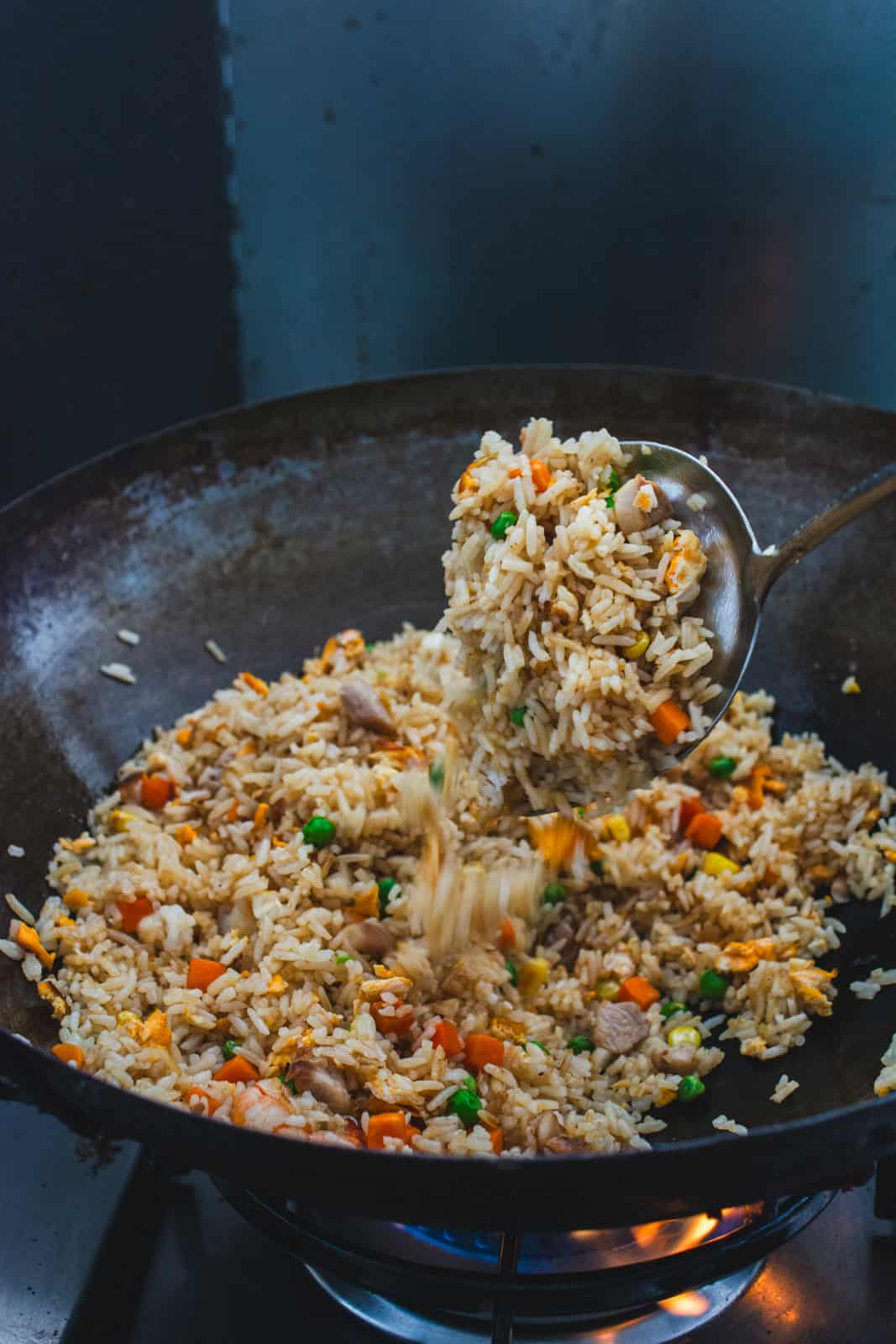
Do you remember the first dish you ever cooked? For me, it was fried rice, and it's held a special place in my heart ever since.
I was about 6 years old at the time, standing on a step stool so I could reach Ah Mah's (my grandmother's) giant wok. My aunt Bee Ee kept a watchful eye beside me. My secret ingredients back then? Ketchup, sugar, and a drizzle of dark soy sauce. Yes, I know it sounds gross, but to my 6-year-old sweet tooth, I thought I had created a masterpiece!
I'd like to think that my fried rice has improved a lot since then, after making countless batches over the decades and plenty of trial and error along the way.
Those "ketchup fried rice" days taught me that there's plenty of room for creativity with fried rice. But...a few tips can help you take it from soggy and clumpy to restaurant-worthy. So let's get into it!
Wok vs. Skillet: Do I Really Need a Wok for Fried Rice?
Even though it is possible to make fried rice in a skillet or a frying pan, I highly recommend using a wok instead.
Most skillets and frying pans are just too small and too shallow for fried rice. Once you add all the ingredients, there is very little room left to move everything around, let alone evenly coat the rice in the seasoning. Try tossing the rice, and if you're not careful, half of it will end up on your stovetop!
A wok has tall, sloped sides that let you toss and stir the rice evenly. Because the wok's sides stay cooler than the bottom, you can push cooked ingredients up the sides (like your scrambled eggs) while cooking the next ingredient in the center.
If you only have a pan or skillet, use the largest one you own, and cook in smaller batches. When you are ready for a wok, I've got a resource on how to season and maintain your wok that you can check out.
The Best Rice for Fried Rice
The type of rice you use makes a huge difference in the texture and flavor of your fried rice. My top pick for fried rice is white jasmine rice.
Jasmine is a long-grain rice, so the grains cook up fluffy and stay nicely separated when stir-fried. This is exactly what we want because each grain gets seasoned evenly.
In my house, we also love Japanese-style Calrose rice, so I frequently switch between jasmine and Calrose, and I often make extra batches just for fried rice.
Calrose rice is a medium-grain rice that's slightly stickier than jasmine rice, so it produces a slightly softer fried rice. Because it's stickier, it can turn mushy if you're not careful. Make sure your rice is properly dried out in the fridge before using it, and avoid adding too much liquid or overstirring.
Can you use brown rice for fried rice? Yes, you can! It's got a slightly chewier texture and nuttier flavor than white rice.
If you're making fried rice for the first time, jasmine rice is the most forgiving.
How to Prep Your Rice Before Frying
Freshly cooked rice has a lot of moisture, so it will just steam in the wok and turn soggy and clumpy.
Always use rice that has been cooked and refrigerated for 1 to 4 days. This gives it a chance to dry out and firm up a little. Keep it in an airtight container (refrigerate it within an hour or two of cooking).
Take the rice out of the fridge about 30 minutes before you start cooking. This allows the rice to come closer to room temperature. Ice-cold rice will cool down your wok quickly, and you'll lose that high heat you need to stir-fry the rice properly. If you're in a rush, pop it in the microwave for about 1 minute.
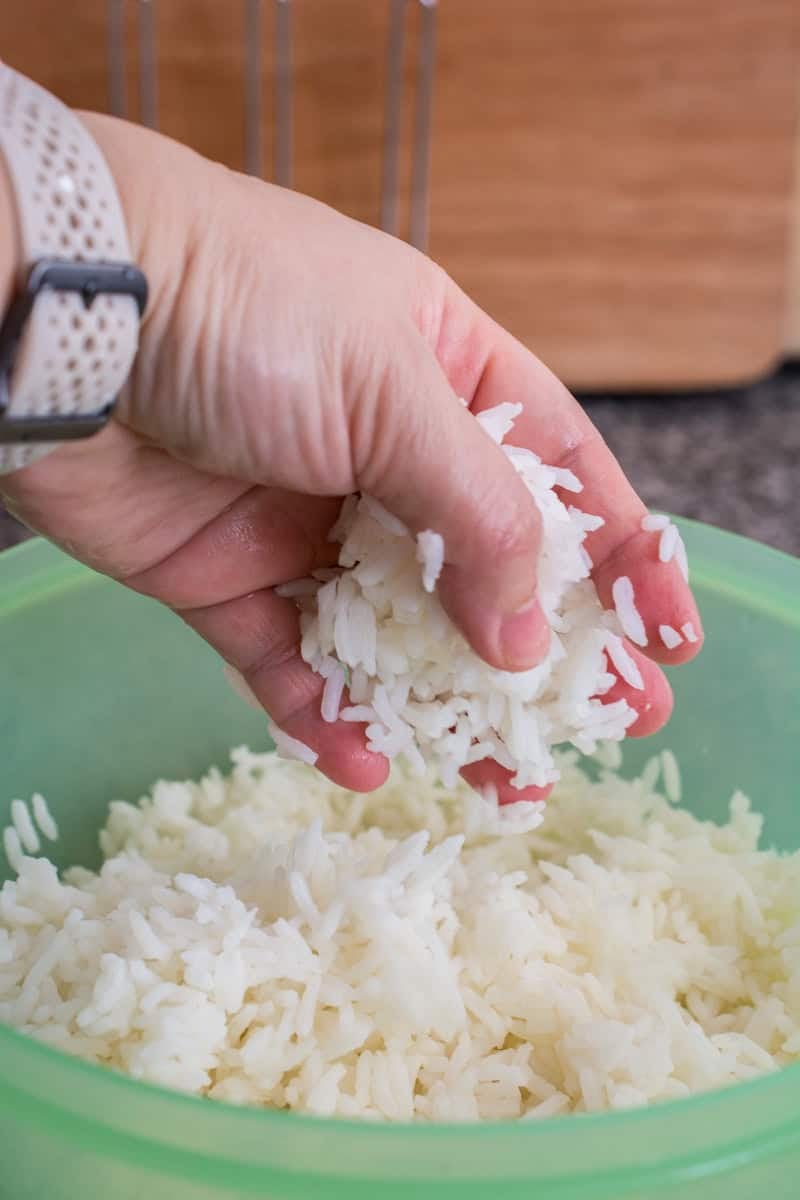
Refrigerated rice tends to clump together, so break it apart before cooking. Wet your hands, then use your fingertips to gently break apart the clumps. The water keeps the rice from sticking to your fingers, so it's a little less messy.
Forgot to cook rice the day before? That's okay. Cook your rice with about 10% less water than usual. After it's cooked, spread it on a baking sheet and let it sit uncovered until it cools down. Once it's cooled, if you're not going to cook it right away, put it in the fridge instead of leaving it out too long.
It won't be quite the same as day-old rice, but it will work in a pinch.
How to Make the Best Fried Rice (Step-by-Step)
Just like with any type of stir-fry, fried rice comes together really quickly, so make sure you have all your ingredients prepped and ready before you fire up the wok.
The steps below are for my basic fried rice with scrambled egg, mixed veggies, shrimp, and chicken.
Step 1: Heat the Wok
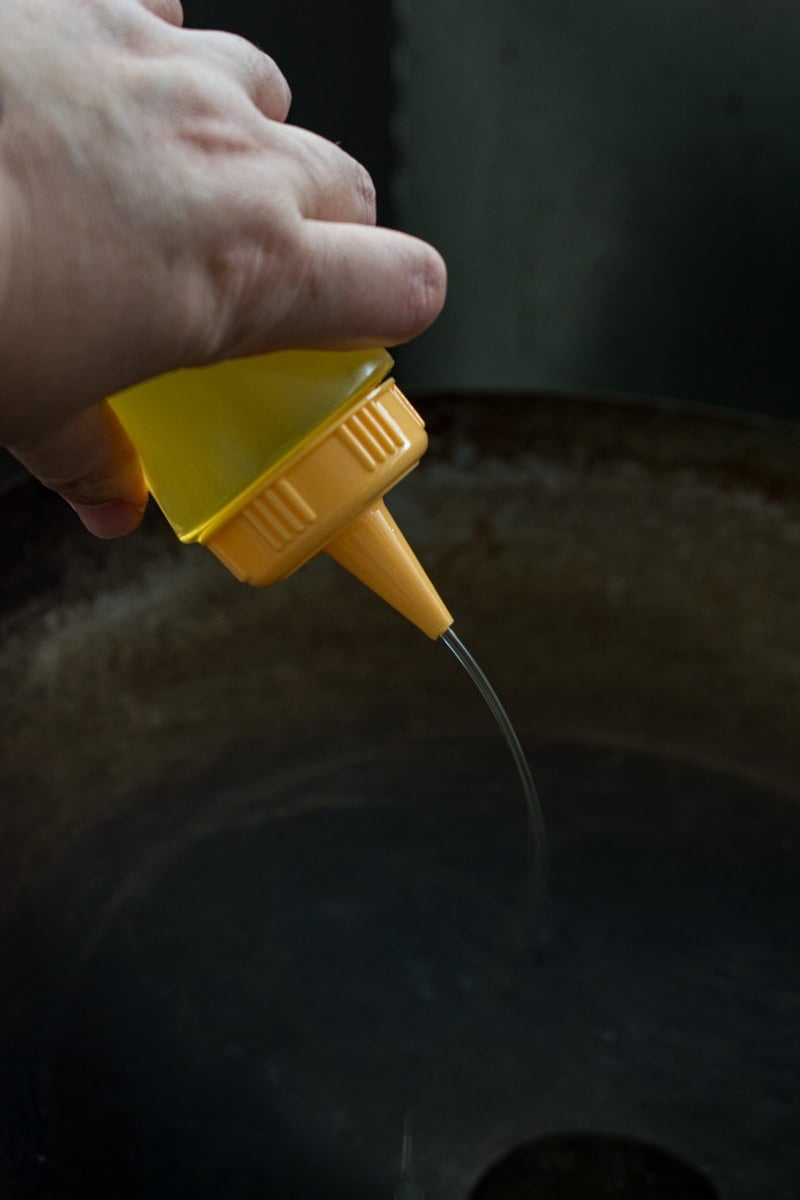
Preheat your wok over high heat until you see a few wisps of smoke, then add some cooking oil. I keep my cooking oil in a squirt bottle for easy access.
Keep the heat high throughout. If anything starts to burn (for example, while cooking the proteins), turn the heat down slightly, then crank it back up once the rice goes in.
Step 2: Scramble the Eggs
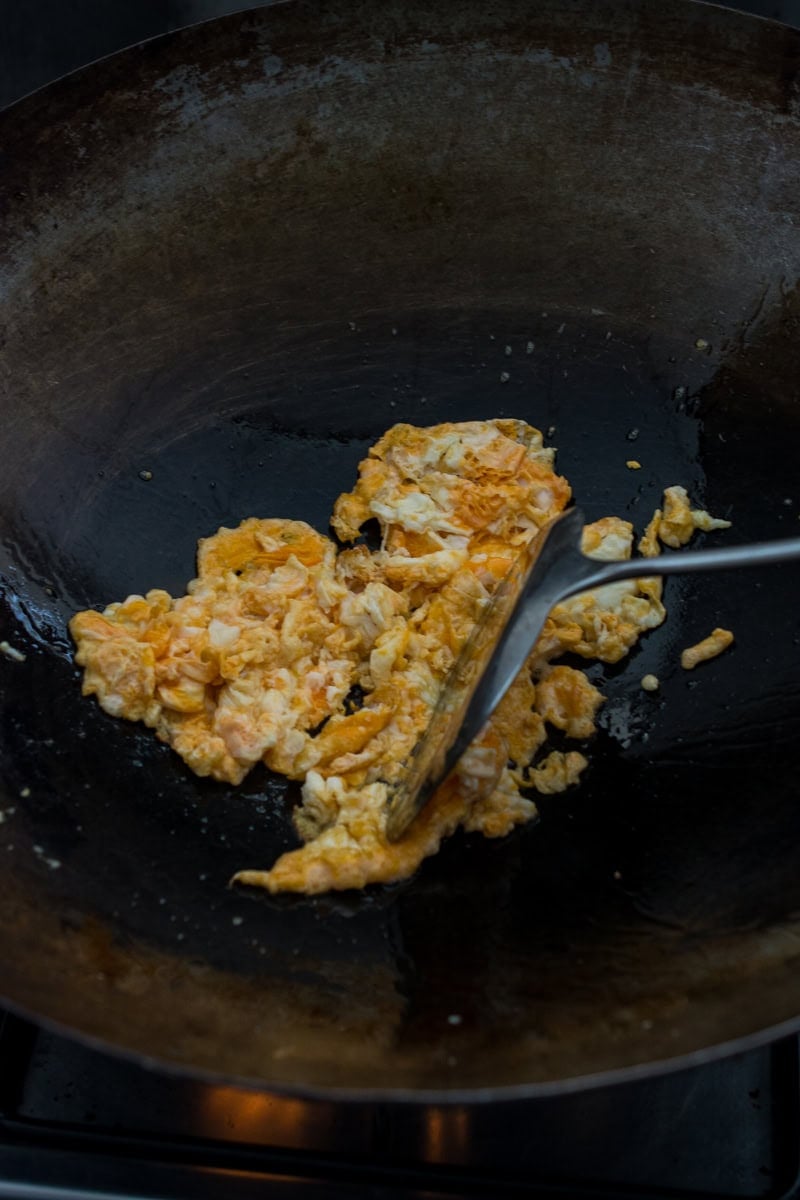
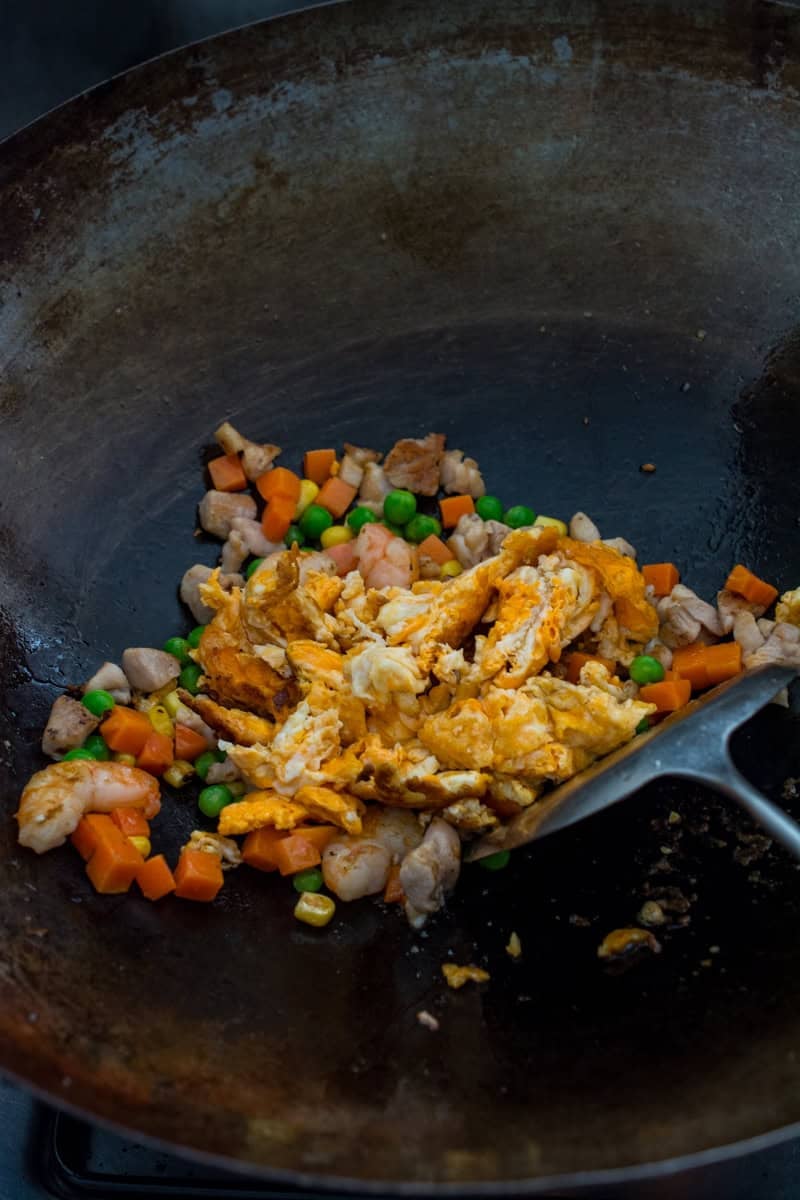
Pour in the beaten eggs, let them sit for about 15 to 30 seconds to allow the bottom to set, then scramble.
If you're cooking raw meat next, remove the eggs and set them aside so they don't overcook.
If you're using pre-cooked proteins (such as char siu or rotisserie chicken) or just veggies, you can simply push the scrambled eggs to the side of the wok to save a step.
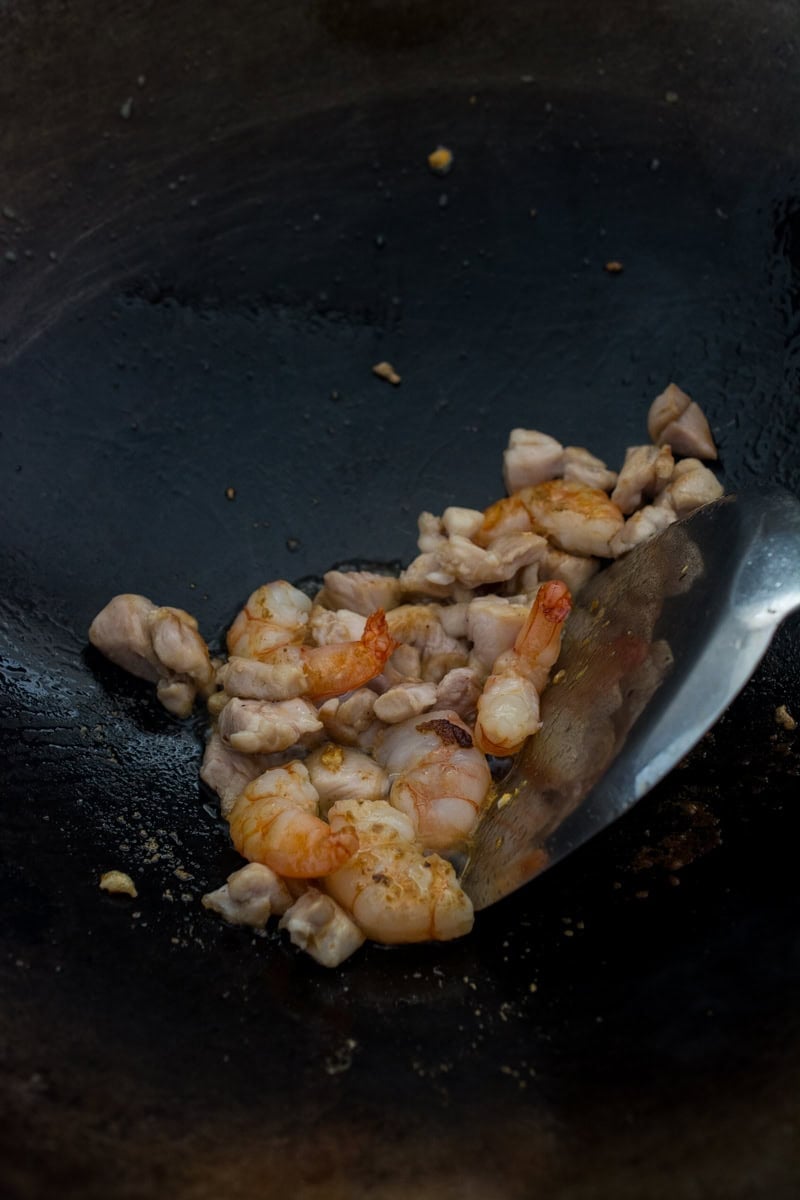
Step 3: Add the proteins
Cut any proteins you use into small, bite-sized pieces.
Cook raw meat or seafood until cooked through, or toss in pre-cooked protein just long enough to warm it up.
Step 4: Add the veggies
If you are using frozen veggies, you can add them straight to the wok to heat them up. Just make sure that the liquid evaporates first before moving on to the next steps.
If you are using fresh veggies, stick with firmer varieties like diced carrots and edamame.
If possible, avoid leafy greens and softer veggies for fried rice, as they carry more moisture and can make the rice soggy and mushy.
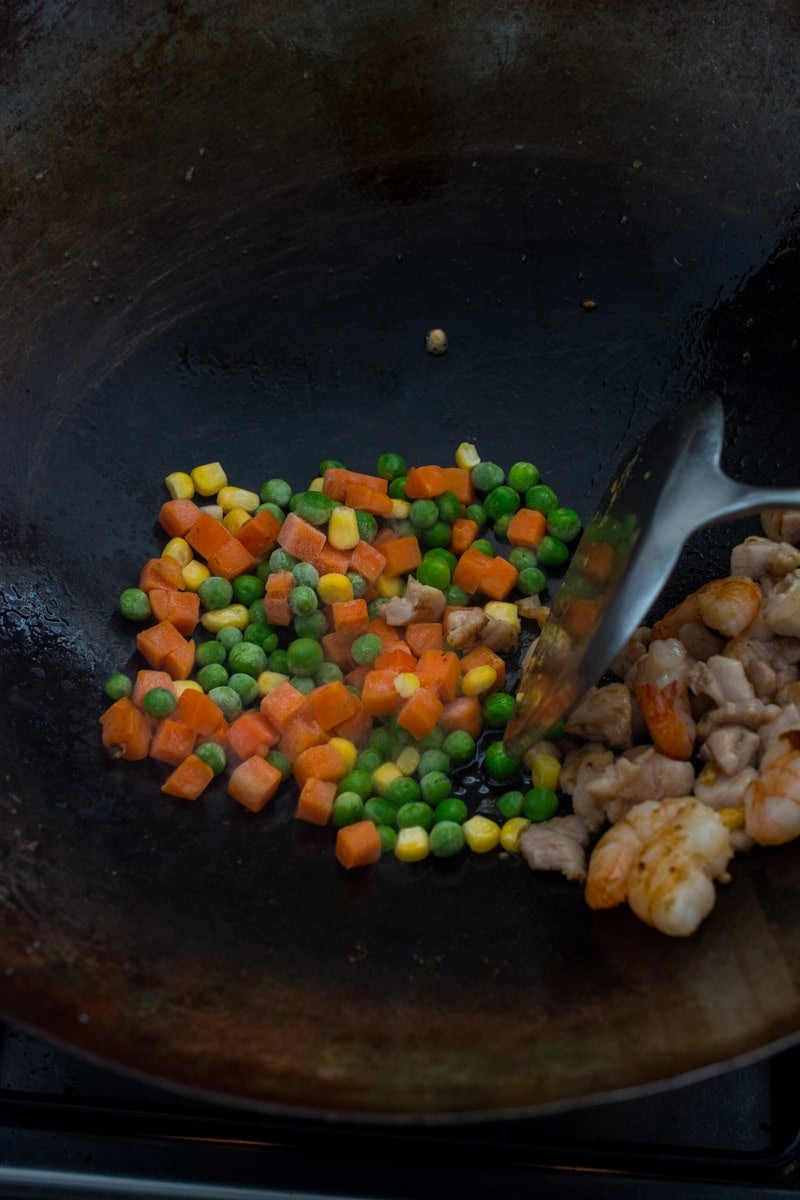
If you set aside the scrambled eggs earlier, add them back to the wok.
Step 5: Add the rice
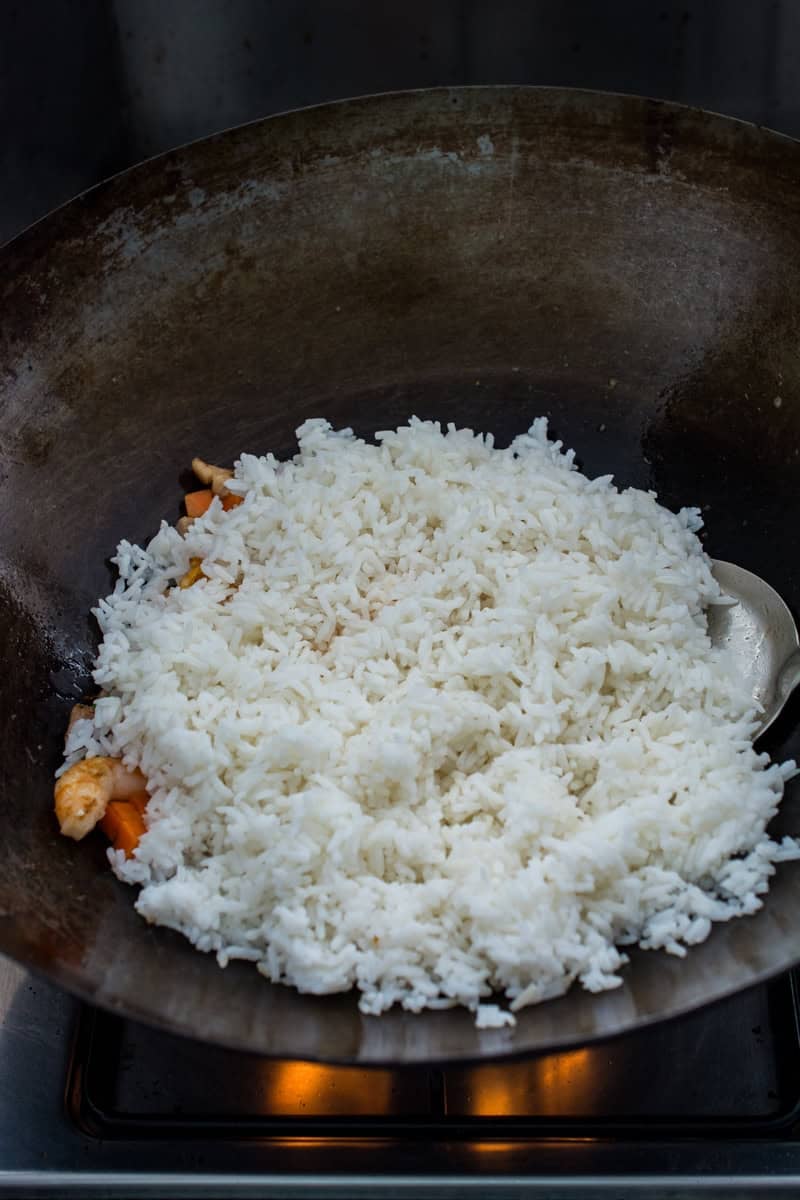
Add your rice to the wok and spread it out as much as possible so it makes contact with the hot surface.
Would you like to save this?
Make sure your rice is properly prepped (please see "How to Prep Your Rice" section above).
Step 6: Add the wet seasonings
My go-to wet seasonings are soy sauce and just a splash of fish sauce.
Like the cooking oil, I keep my soy sauce in a squirt bottle because it's much more convenient.
If you want to give your fried rice a darker color, add a small drizzle of dark soy sauce.
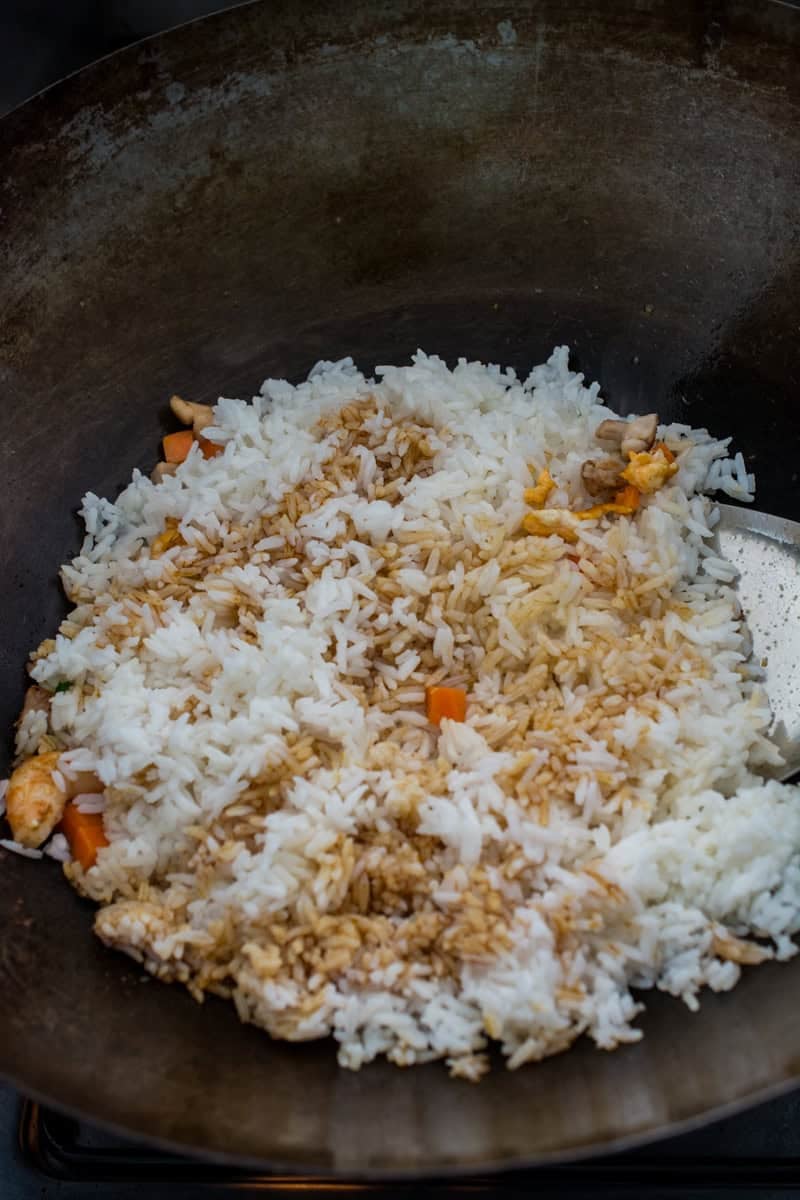
Step 7: Add the dry seasonings
Here are my typical dry seasonings for fried rice:
- Salt: Soy sauce has some salt, but it won't be enough to season your fried rice, so adding a bit of salt will make sure it's properly seasoned.
- Ground white pepper: I prefer white pepper (instead of black pepper) for fried rice because it has an earthy flavor that matches the seasonings better.
- My secret ingredient, chicken stock granules (also known as chicken bouillon powder): This adds a restaurant-quality flavor boost to the fried rice. Just a teaspoon really makes a difference.
Taste and adjust the seasonings as needed.
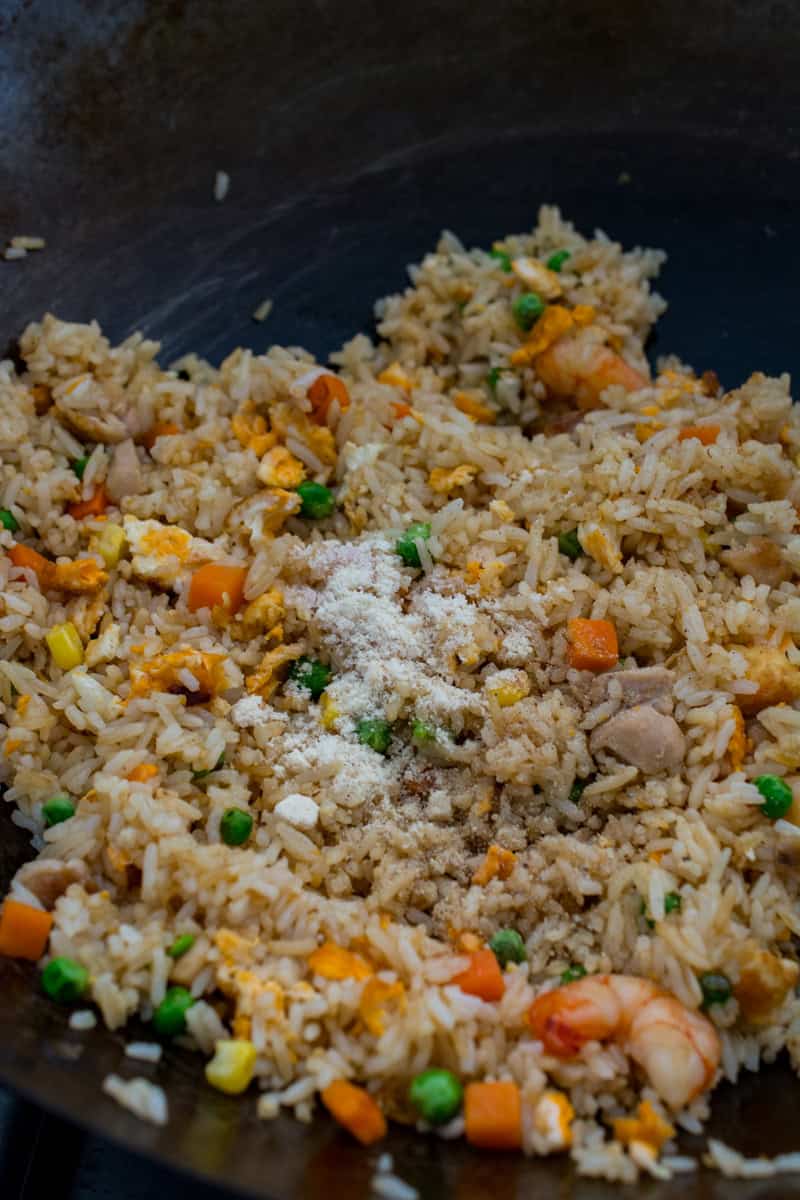
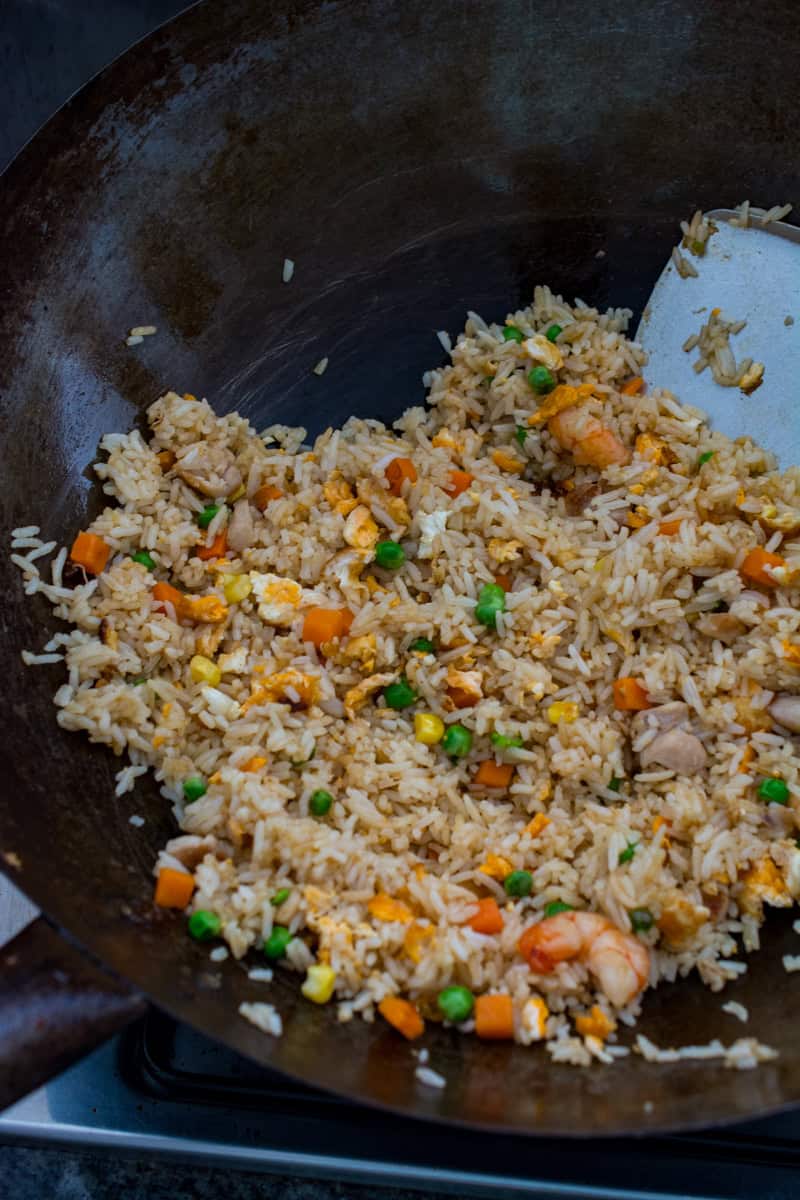
Step 8: Toss everything together
Give everything a good stir so the rice is evenly seasoned.
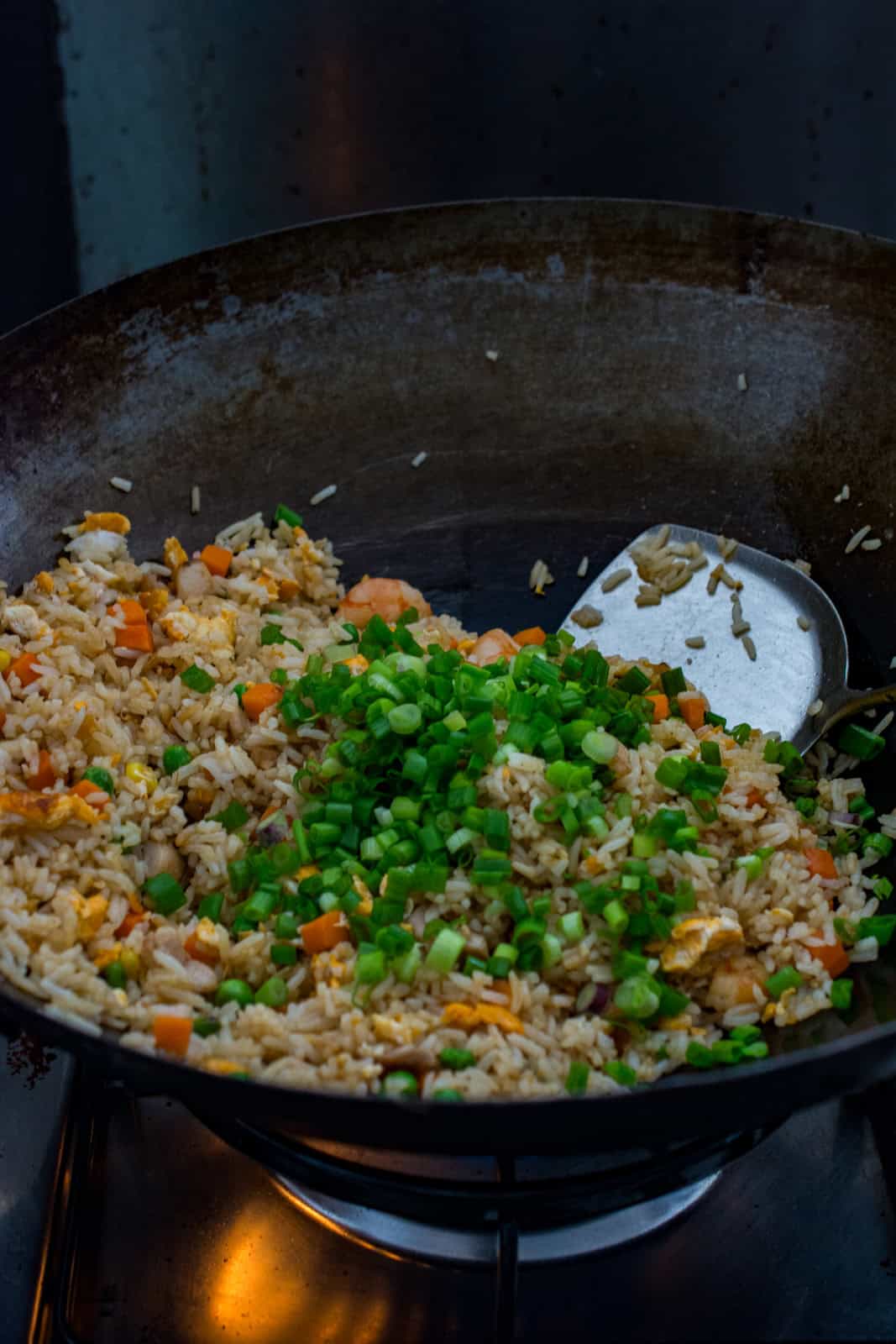
Step 9: Finish with chopped scallions
Add chopped scallions and give everything a final toss. Don't underestimate them! They add a fresh, mild onion flavor and a pop of color.
When I first started making fried rice, I rarely added scallions, but now they're the first thing I make sure I have on hand when I plan to make fried rice. They really do make such a big difference.
How to Add Egg to Fried Rice: Scramble First or Add It Raw?
You can add egg to fried rice in two ways, and each gives a slightly different texture.
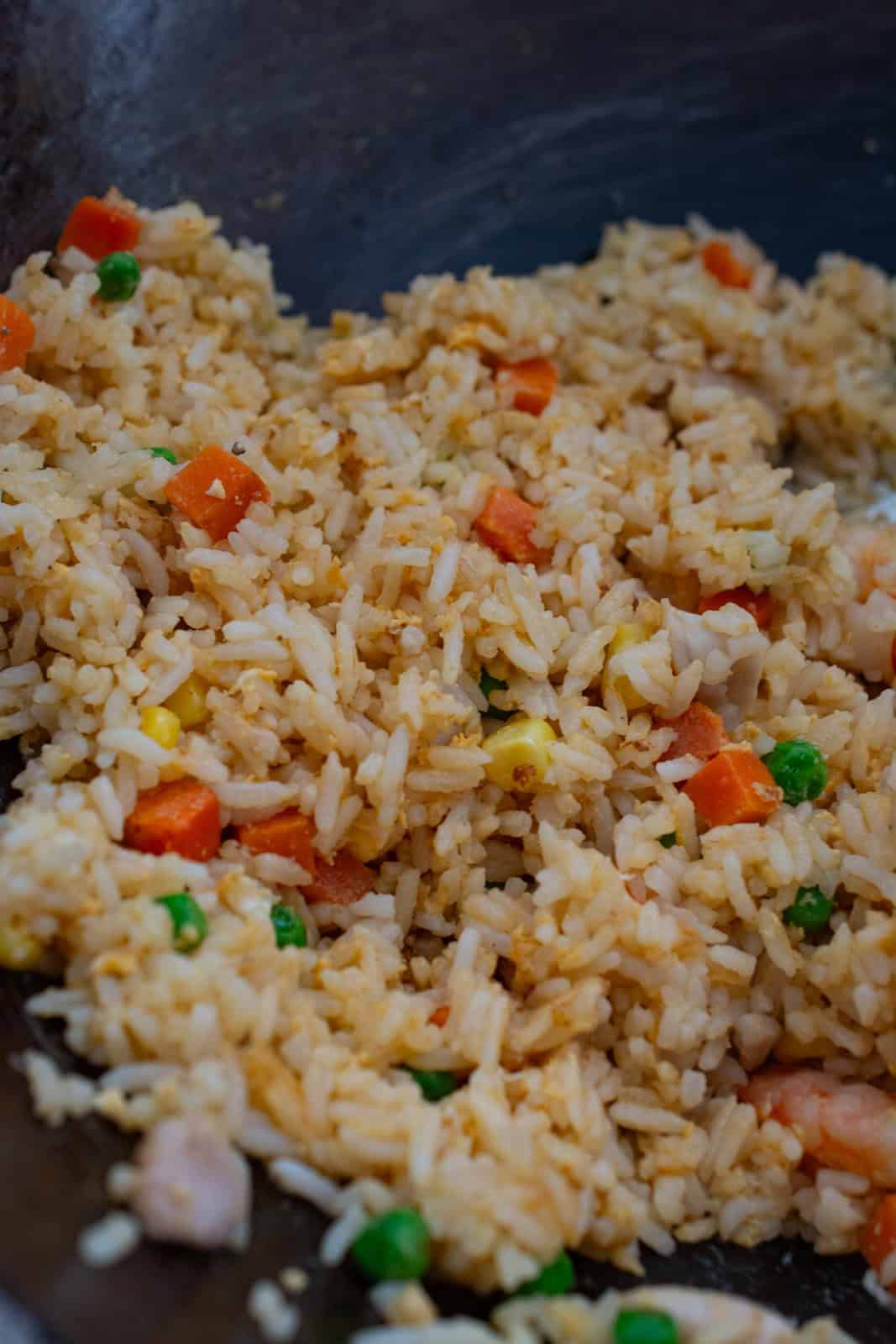
Scramble first: Scrambling the egg before adding the rice gives you fluffy egg pieces throughout. This is the method I outlined in the steps above.
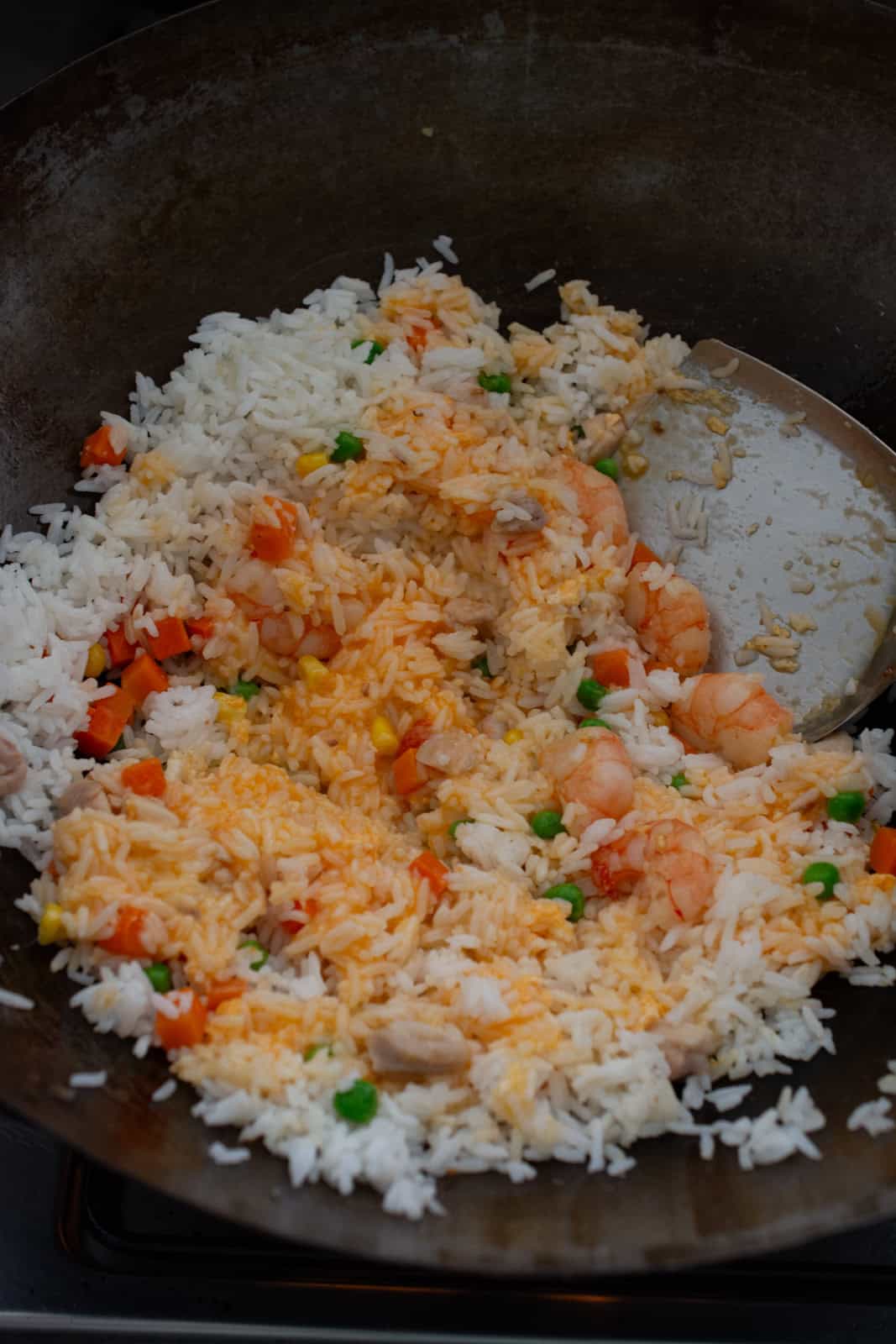
Add it raw: Pour the beaten eggs directly over the rice for a completely different result. Instead of distinct pieces of scrambled egg, the egg wraps around each grain in a thin, silky layer, giving you what's called "golden fried rice". Each bite will give you a velvety egg flavor and texture. If you let the egg set a little before tossing, you'll get some larger, more distinct pieces too.
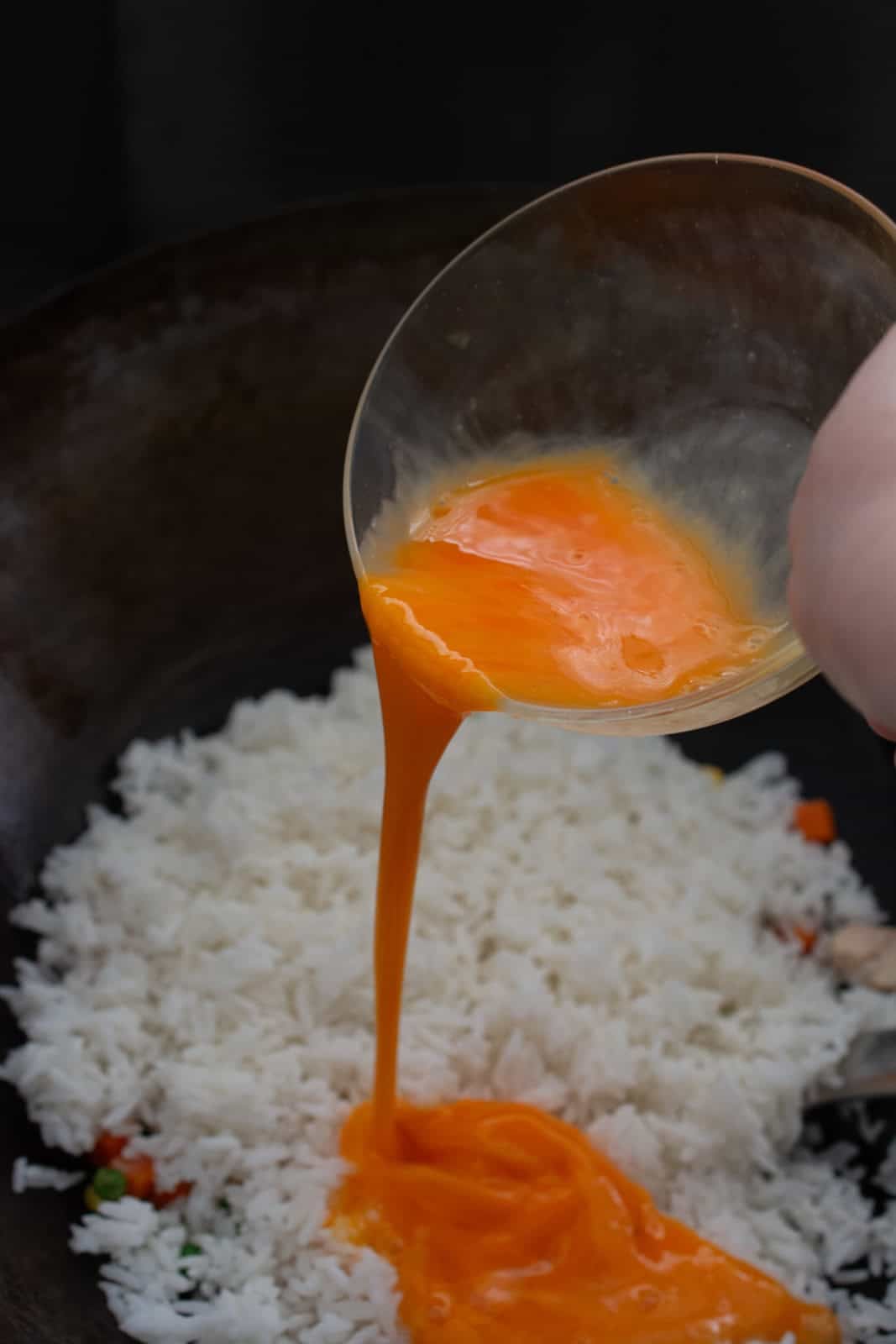
One caveat to the raw egg method is that it adds moisture, so if your rice is on the softer side or if your wok is not hot enough, the rice may get mushy.
If you're new to making fried rice, I recommend scrambling first, as it's the most foolproof way to get restaurant-style fried rice every time.
How to Create Your Own Fried Rice
One of the best things about fried rice is how versatile it is. It's great for using up leftover rice, plus any leftover protein and veggies! The steps I've outlined above give you a solid foundation, so once you've got the basics down, you can make it your own.
Choosing your protein
You can use just about any protein: chicken, pork, beef, shrimp, firm tofu, leftovers like roast chicken or steak, even just eggs. If you use meat, cut everything into small, bite-sized pieces.
Choosing your veggies
Stick with firmer veggies such as carrots, edamame, peas, string beans, or diced bell peppers.
Avoid softer veggies and leafy greens, as they tend to release moisture and can make your fried rice soggy.
Keep the flavors simple
When choosing fried rice ingredients, keep them as simple as possible rather than throwing everything into the wok to "clear the fridge."
If you're combining proteins, make sure the flavors work well together. For example, chicken and shrimp pair well.
The more ingredients you add, the more likely you are to create competing flavors. When in doubt, taste as you go, then adjust.
Know when to follow the recipe
Some fried rice recipes are designed around specific flavor profiles. For example, Thai Pineapple Fried Rice gets its signature taste from curry powder, turmeric, fish sauce, and well...pineapple.
When a recipe calls for something specific, it's best to stick with it, at least the first time you try it.
Fried Rice Recipes to Try
Now that you've got my best fried rice tips, it's time to put them into practice! Browse my collection of fried rice recipes or check out some classic and unique recipes for even more inspiration.
Here are some favorites to get you started:
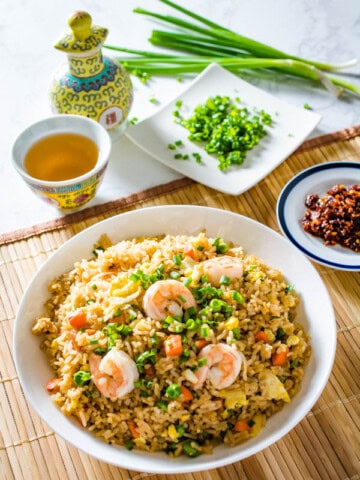
- Shrimp Fried Rice
- Spam Fried Rice
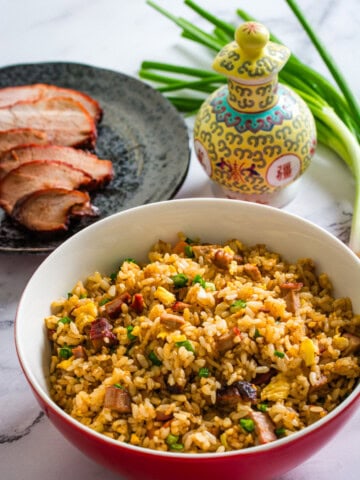
- Char Siu (Chinese BBQ Pork) Fried Rice
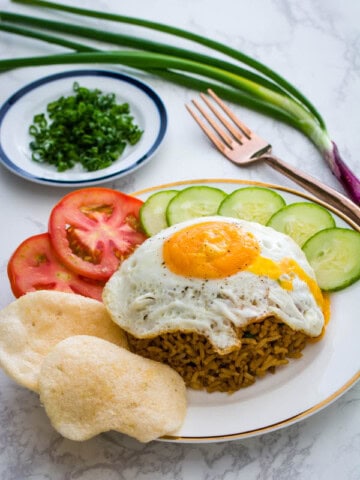
- Indonesian Nasi Goreng
- Bacon Fried Rice
Frequently Asked Questions
Most of the time, it's because the rice is too freshly cooked. Fresh rice still holds a lot of moisture, so it steams rather than stir-fries. Be sure to use rice that has been refrigerated for at least a day (up to 4 days), as the cold air dries it out.
It's also possible that the heat is too low, or the rice that you've added cooled down the wok. Let the rice come closer to room temperature instead of tossing it into the wok straight from the fridge.
Fried rice usually needs more seasoning than you think. Always taste before serving. Simply adding more salt may be all you need, or for an extra flavor boost, use my secret ingredient: chicken stock granules.
This usually happens when the wok isn't hot enough, or when there isn't enough cooking oil. Make sure the wok is properly preheated (you should see a bit of smoke before adding the oil). A well-seasoned wok also really helps to prevent sticking. Check out my guide on how to season and maintain your wok.
Yes, you can! Soy sauce adds saltiness and a deep, savory flavor, but you can swap it for tamari (gluten-free) or coconut aminos (soy-free).
If you prefer not to use any sauce, that's also okay. I would recommend increasing the salt and adding chicken stock granules for more flavor.
Choose a neutral oil with a high smoke point, such as canola oil or peanut oil. Sometimes, I like to drizzle a touch of sesame oil at the end for flavor.
Yes, absolutely, but thaw it in the fridge overnight, or microwave it first to bring it closer to room temperature. Do not add frozen rice to the wok straight from the freezer.
Fried rice will keep in the fridge for about 3 to 4 days in an airtight container. Refrigerate it within an hour or two of cooking. If your fried rice has shrimp, it's best enjoyed within a day or so, since shrimp tends to turn rubbery when reheated.
A hot wok or frying pan will give you the best results for reheating fried rice. If you're using the microwave, add a splash of water if it has dried out.
Leave a Reply