
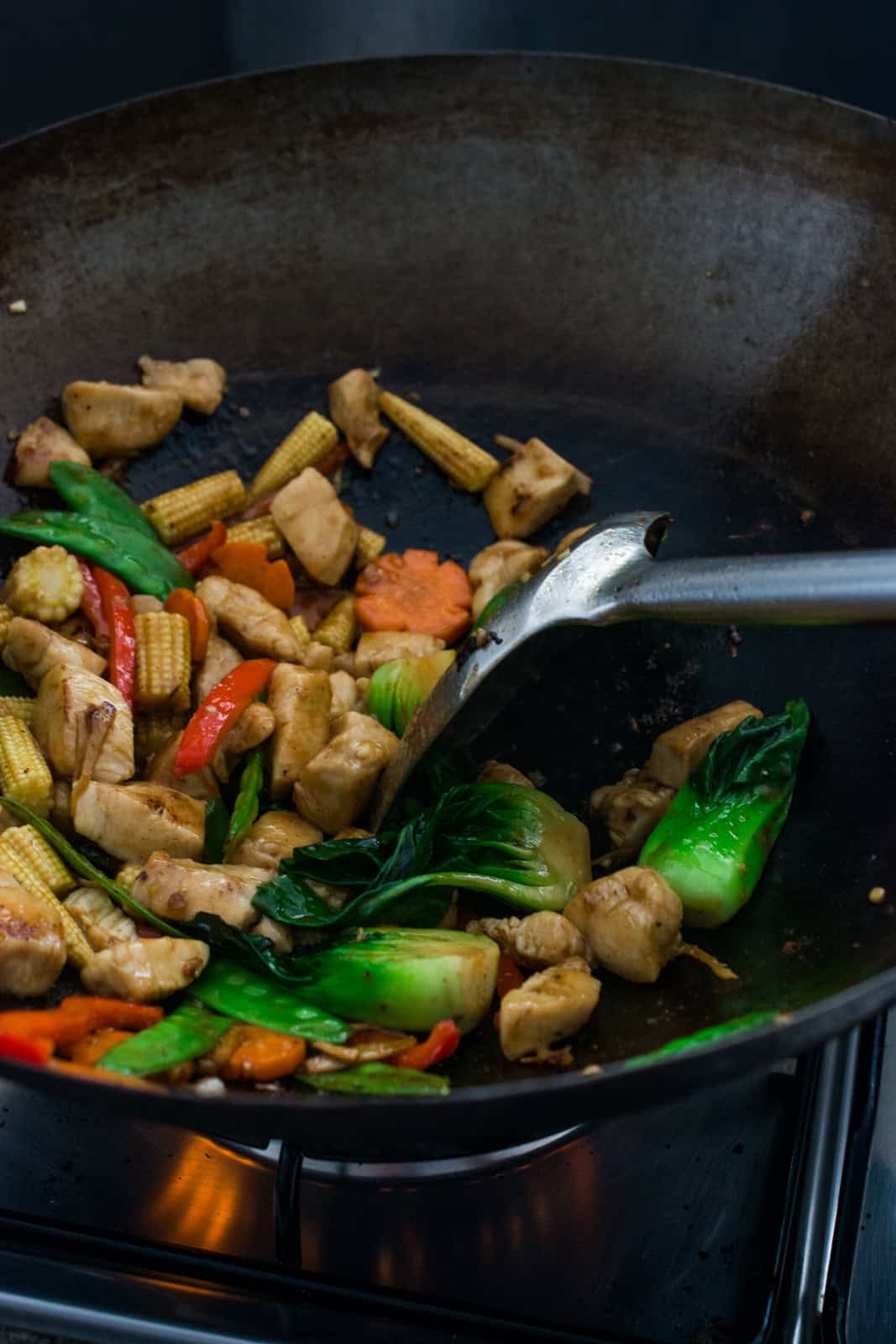
If you've ever ended up with a pan full of soggy, steamed veggies instead of that glossy restaurant-style dish you were going for, you know there's more to stir-frying than just high heat and fast cooking.
Growing up watching my Mum cook, stir-frying looked like just instinct. She never measured anything, and always seemed to know whether the wok was hot enough, and everything always came out perfectly every time.
It was only after I moved out on my own, thousands of miles away, that I realized what looked like instinct was actually a handful of techniques she had mastered, which I slowly learned through her guidance and trial and error. Once I learned them, everything changed.
Stir-frying is the backbone of Asian cooking, and once you understand how it works, it opens up a whole world of dishes. Yes, there's the classic protein-and-veggie combination, but stir-frying also gives you fried rice, fried noodles, standalone veggie or protein dishes, and so much more. It is one of the most versatile techniques you can have in your kitchen.
In this guide, I'll walk you through everything you need to know about stir-frying: the equipment, the prep, the technique, and mistakes to avoid, so you can get it right the first try!
What You'll Need
You don't need much in terms of equipment, but the right tools really make all the difference.
Wok: I highly recommend either a carbon steel or cast iron wok here. I personally use a carbon steel wok just about every day and love it! If you're new to woks, I have a full step-by-step guide on how to season a wok that will walk you through the process of seasoning and maintaining it.
I don't recommend non-stick woks. They can't handle the high heat that stir-frying needs, and you'll also miss out on that lovely sear that gives a stir-fry its flavor.
Even though it is possible to stir-fry in a large pan or skillet, I'd still go for a wok. A wok has tall, curved sides where you can toss and move your food around freely without accidentally flinging it out of the pan. Those sloped sides also create a natural heat gradient, so you can push cooked food up the sides to keep it warm while you cook the rest of the batch.
Wok spatula: Use a metal wok spatula. Most metal wok spatulas are slightly rounded to match the curve of the wok, so they scoop all of the food cleanly, even liquids!
A silicone or wooden spatula isn't firm enough to be able to scrape the lovely browned bits off the wok's surface.
Your stove: Any stove works, whether it's gas, electric, or induction. If you have a flat stovetop, a flat-bottomed wok will sit securely on it. Round-bottomed woks need a wok ring to hold them steady, so they're better suited to gas burners with a grate.
Regardless, you'll want to use your most powerful burner for stir-frying (we'll talk more about this in the Controlling the Heat section below)
So these are just the stir-fry basic tools you'll need. If you're building your setup further, my guide to Asian kitchen essentials covers the other tools that get regular use in my kitchen
What You Can Stir-Fry
One of the best things about stir-frying is its versatility, making it one of the most practical techniques to have in your cooking toolkit.
When people refer to a stir-fry as a dish, it usually includes some type of protein, veggies, and a sauce. Here is a breakdown of these building blocks:
Protein
The most common proteins in a stir-fry include chicken, beef, pork, shrimp, and tofu.
You could combine more than one protein, but do keep in mind that each brings its own flavor. Chicken and tofu are mild and take on whatever sauce you pair them with, so they're quite flexible. Beef and pork are richer and can take on bolder sauces. When mixing proteins, you will want to consider how their flavors will play together.
Whichever protein(s) you decide on, make sure they are cut into uniform cubes or slices of roughly the same size so they cook quickly and evenly.
For extra-tender meat, try velveting. Velveting is a classic Chinese technique in which you toss the meat in a bit of cornstarch and seasoning before cooking (allow it to marinate for about 20-30 minutes at room temperature). The cornstarch acts as a protective barrier against the wok's high heat, sealing in the juices and giving you that silky texture you get in restaurant stir-fries.
Vegetables
This is where your dish can really shine. Some of my favorite veggies for stir-frying include carrots, water chestnuts, baby corn, snap peas, snow peas...the list goes on. When choosing your veggies, aim for a mixture of textures and colors.
The main thing to keep in mind is that the vegetables cook at different rates. Firmer ones like carrots and broccoli take a bit longer, while tender ones like leafy greens cook in seconds. Add them to the wok in that order. Firmest first, so everything finishes cooking at the same time.
Aromatics
Don't skip the aromatics! These are what give your stir-fry that amazing fragrance and depth.
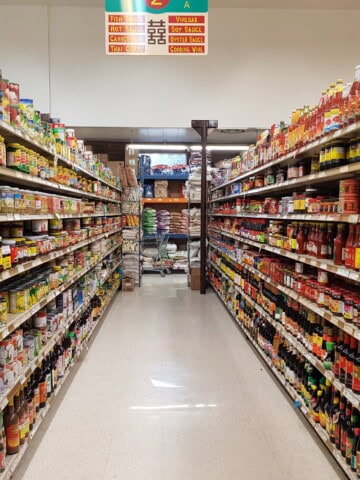
Garlic and ginger are the classic must-haves. Other aromatics you may consider once you've mastered the basics include shallots or onions, chili, lemongrass, curry leaves, and makrut lime leaves for a Southeast Asian twist. These aren't always easily found at a regular supermarket in most Western countries, but you'll find them easily at an Asian grocery store. Here's how to navigate one if you've never been.
Sauce
The stir-fry sauce is what ties everything together. A simple sauce often starts with light soy sauce as the backbone, balanced with a bit of sweetness.
If you're not sure what else to keep stocked for sauces like this, my Asian pantry essentials guide covers the staples I always have on hand in my kitchen.
How much sauce is completely up to you. Some stir-fries call for just enough sauce to lightly coat and flavor your dish, while others are saucier with plenty to spoon over rice.
If you prefer a thicker, glossier sauce, whisk in a little cornstarch. A splash of chicken stock adds great depth too, but if you don't have any on hand, a little chicken bouillon powder stirred into water works well.
How to Combine Your Ingredients
The building blocks outlined above give you a lot to work with. While it is true that you can stir-fry just about anything, you will want to consider a few things for a successful stir-fry.
Flavor
Think about whether the flavors of your chosen ingredients complement each other, not just the proteins, but also the vegetables and sauces. When choosing your ingredients, make sure the flavors won't clash or compete too aggressively.
Texture
The best stir-fries have contrast. Something tender alongside a bit of crunch. Think tender chicken with crunchy carrots and baby corn. If everything in your stir-fry is all soft, it might end up feeling a bit flat.
Once you get a feel for good texture and flavor balance, you will have full creative license to make it truly your own.
How to Prep for Stir-Frying
Once the stove is on, everything moves fast, so having everything prepped and ready to go is crucial. In French, this is called "mise en place" (pronounced meez-ahn-plas)
You won't have time to stop and chop, open and close bottles, or measure your ingredients.
- Cut your protein into uniform pieces so each piece cooks at the same rate. Otherwise, some pieces may end up undercooked or overcooked.
- Prep and chop your veggies while your protein is marinating, cutting them into similar sizes for even cooking. For firmer veggies such as carrots, slice them into thin pieces so they cook faster.
- Arrange your vegetables in the order of their cooking time: firmest first, soft leafy greens last.
- Mince or chop your aromatics.
- Combine all your sauce ingredients in a small bowl and keep it within arm's reach. Keep a small spoon in the bowl so you can give it a quick stir just before you pour it into the wok.
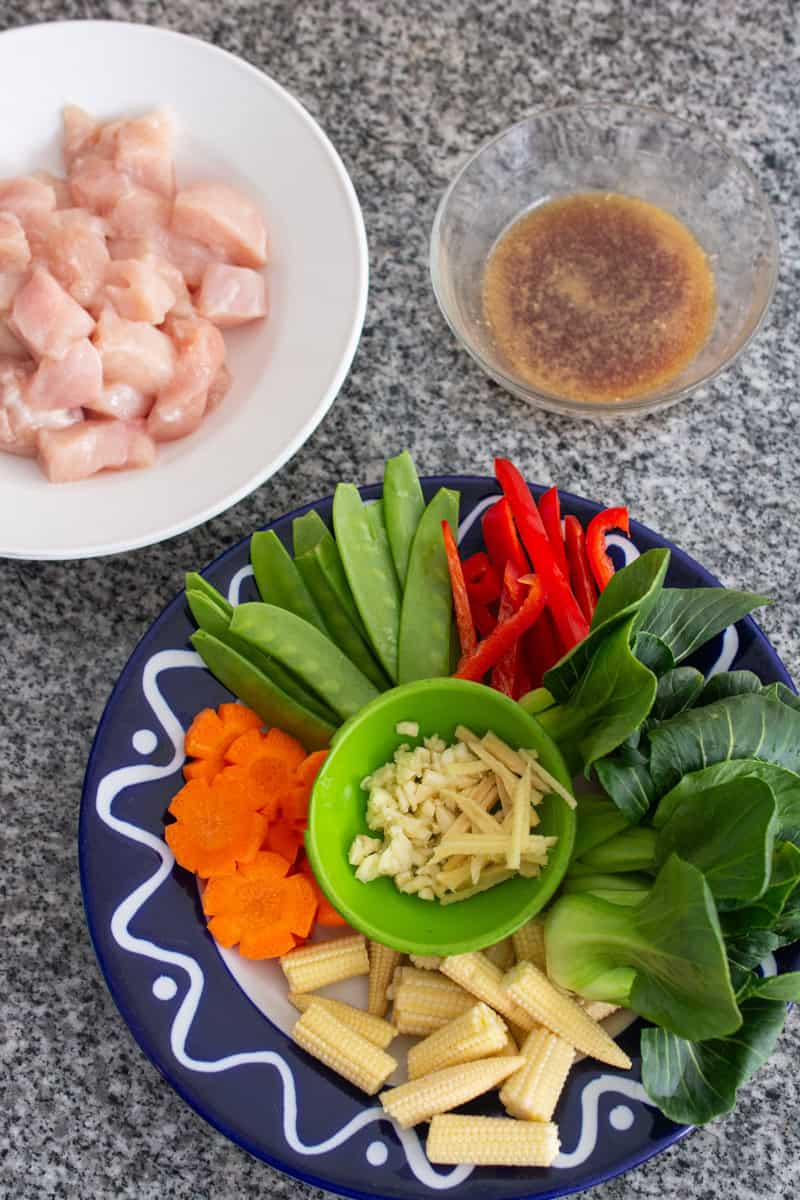
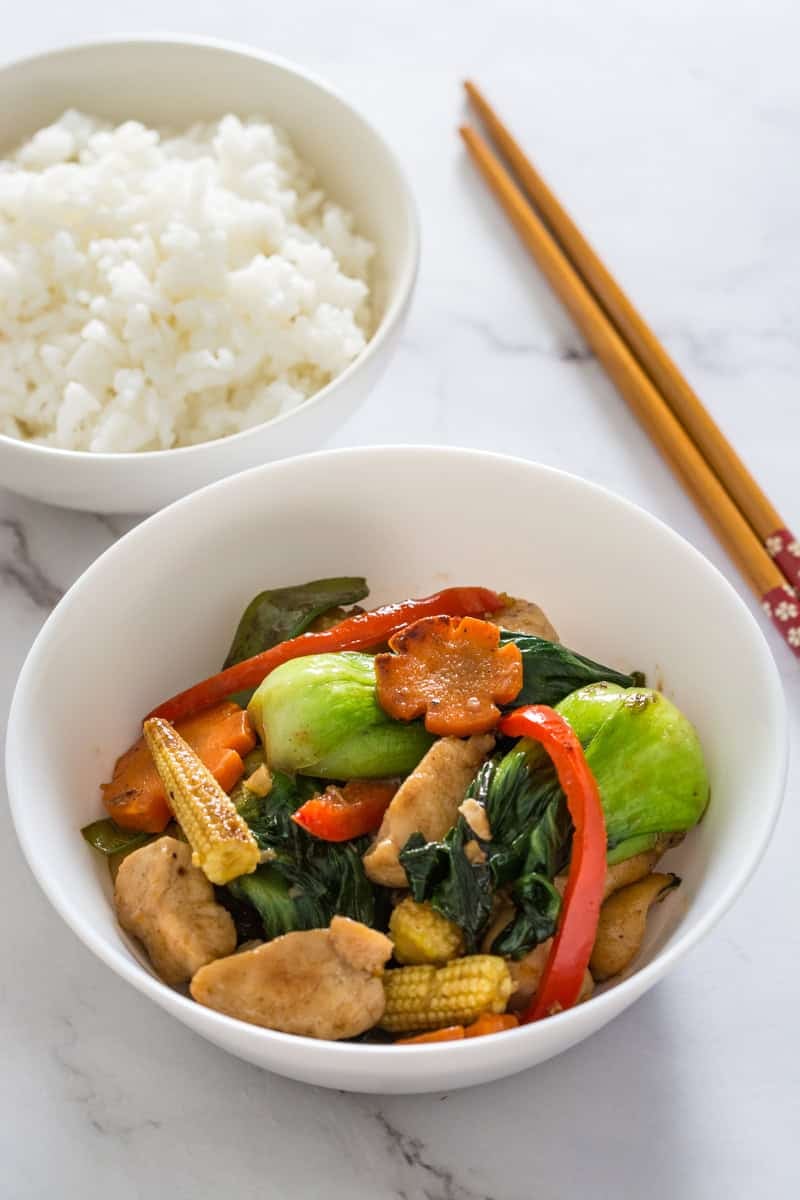
By the way, if you like the shape of the carrots in the photo above, I have a separate tutorial on how to cut carrots into flowers you may check out.
How to Stir Fry, Step by Step
Step 1: Heat the wok
Place your wok over medium-high to high heat, and let it heat up. Unless specified in the recipe, wait till the wok is sizzling hot before adding your oil. You'll know it's ready when you see the first wisps of smoke.
Would you like to save this?
Step 2: Add oil to the wok
Pour in your cooking oil and swirl it around to coat the surface. Use an oil with a high smoke point, such as canola, palm, or peanut oil.
Pro Tip: I keep my cooking oil in a plastic squeeze bottle so I can easily add oil to my wok at any time. No need to open and close any bottles.
Step 3: Sear the protein
Add your protein in a single layer and allow it to sear without touching it for about 30 seconds.
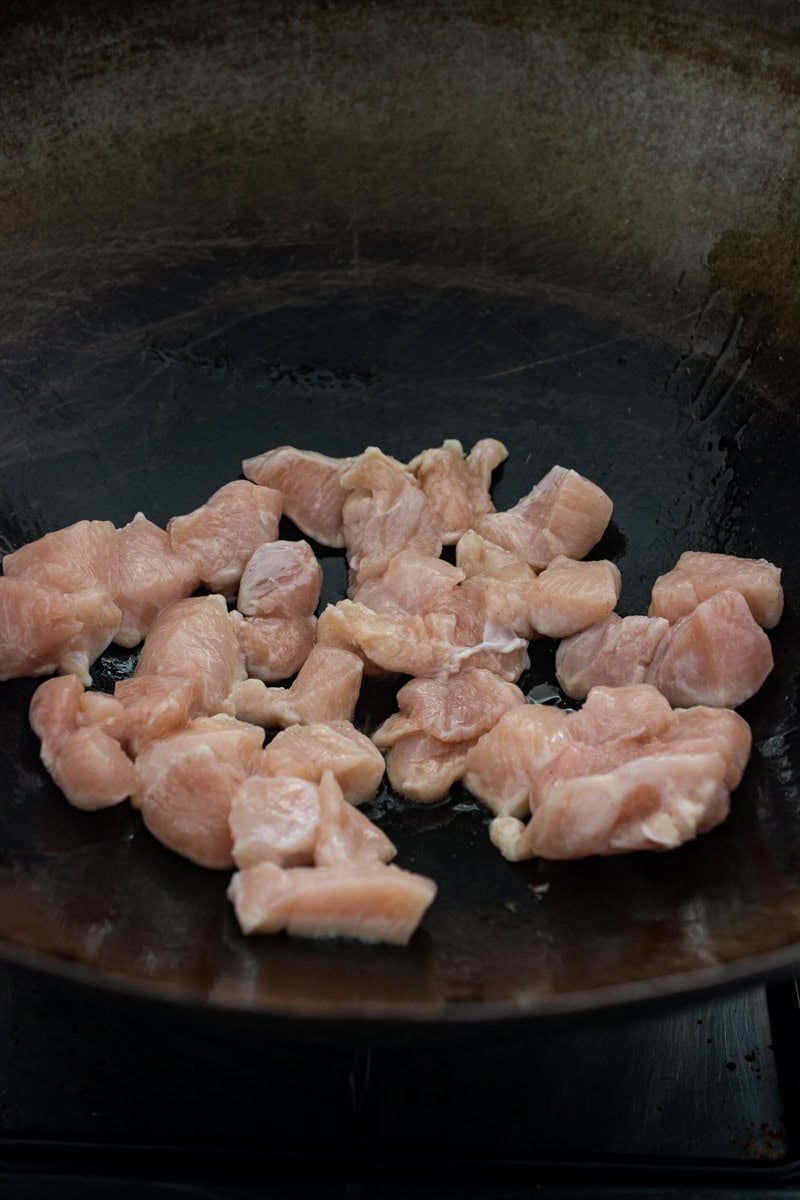
It's important to allow the bottom side to sear before flipping and moving the pieces around the wok. Resist the urge to constantly stir.
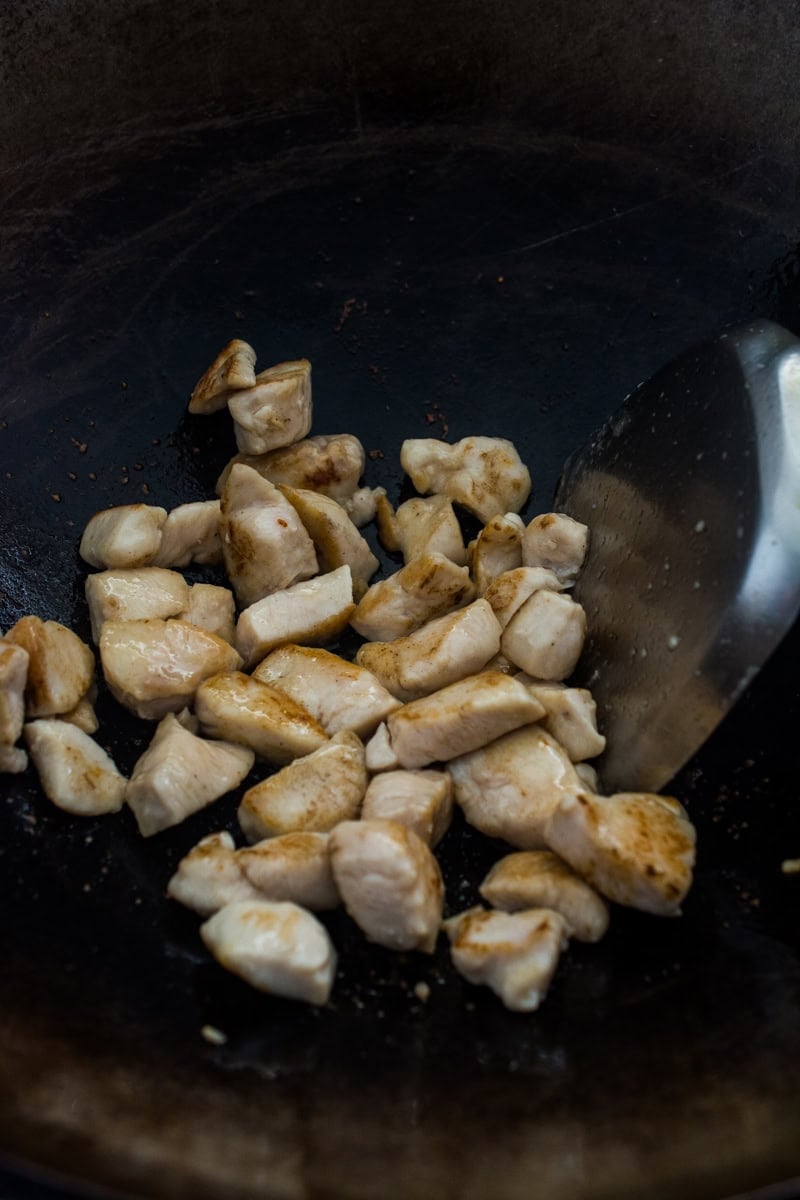
Once the meat is cooked, remove it from the wok and set aside.
Step 4: Add the aromatics
Add a bit more oil if needed, then add your aromatics. These can go from fragrant to burnt within seconds, so keep them moving and get to the next step quickly.
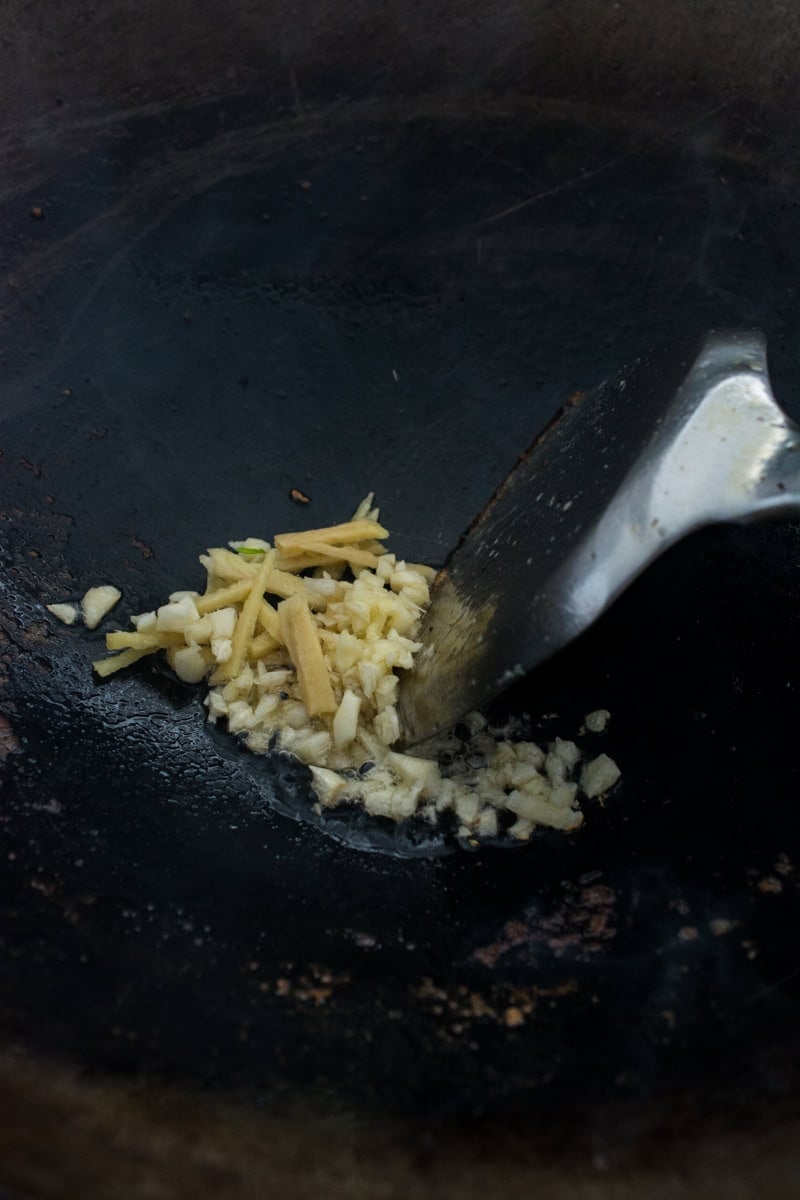
Step 5: Add the vegetables
Add your vegetables, starting with the ones that take the longest to cook. Toss and stir, keeping everything moving.
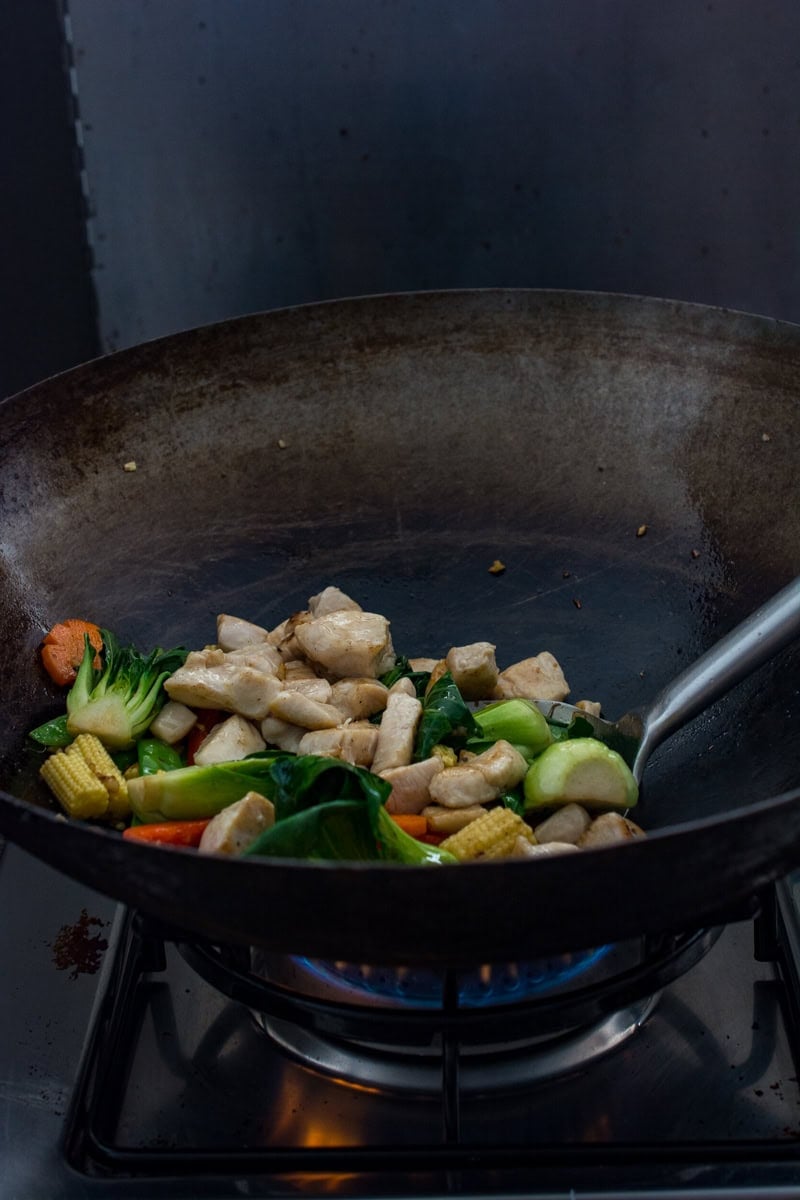
In the photo below, I start with the carrots, baby corn, and snow peas.
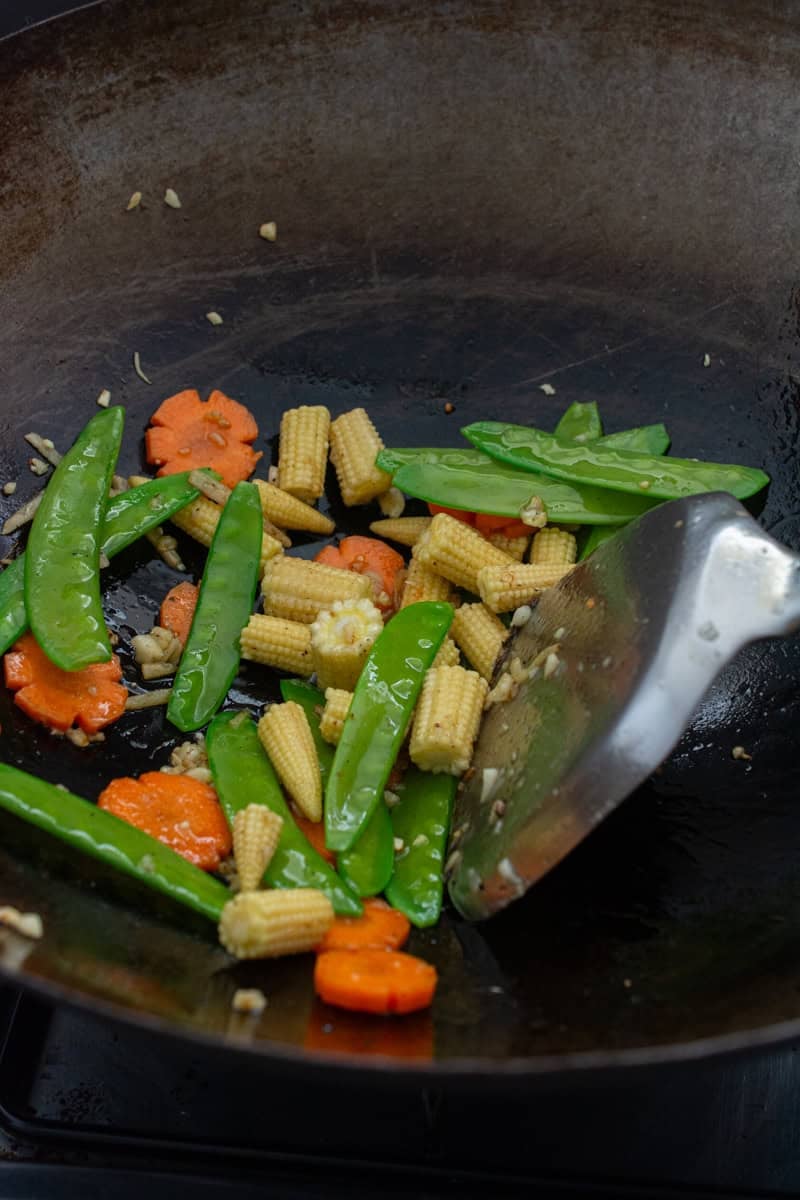
Next, I added the baby bok choy and red bell pepper as they cook faster.
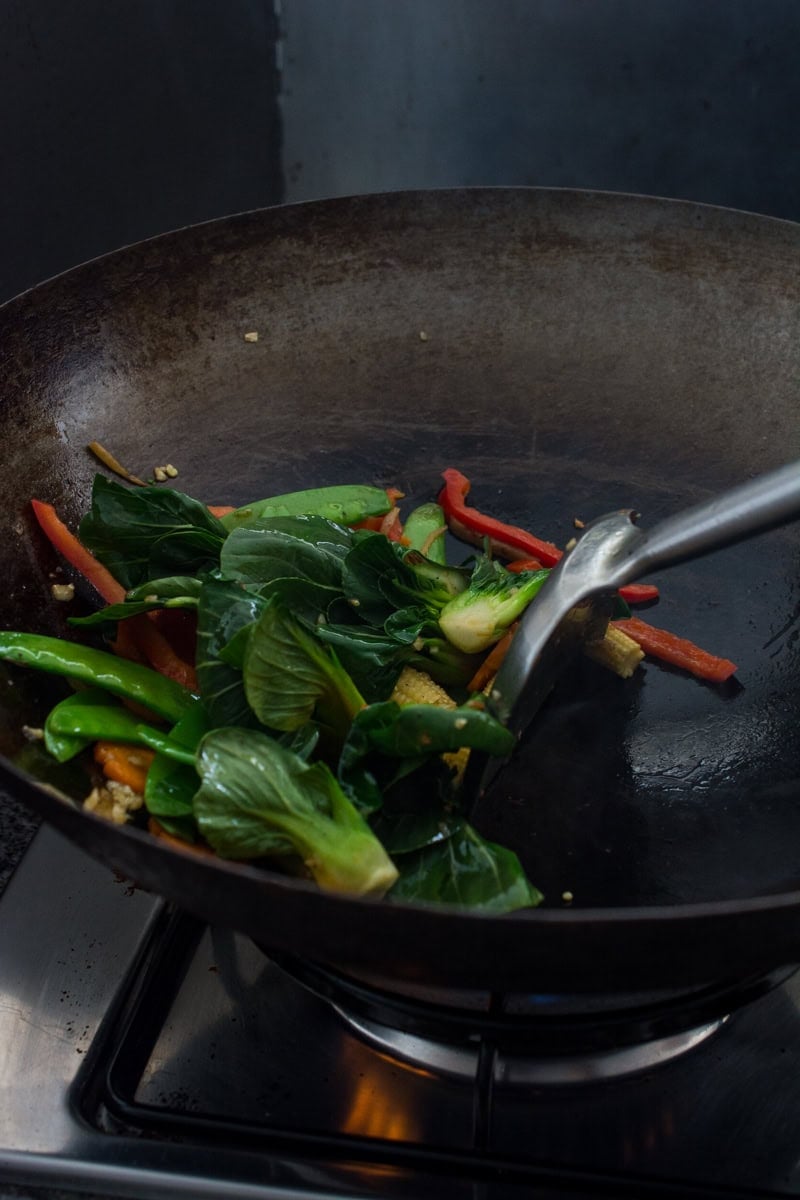
Step 6: Return the protein to the wok
Add the cooked protein back into the wok and toss to combine.
Step 7: Add the sauce
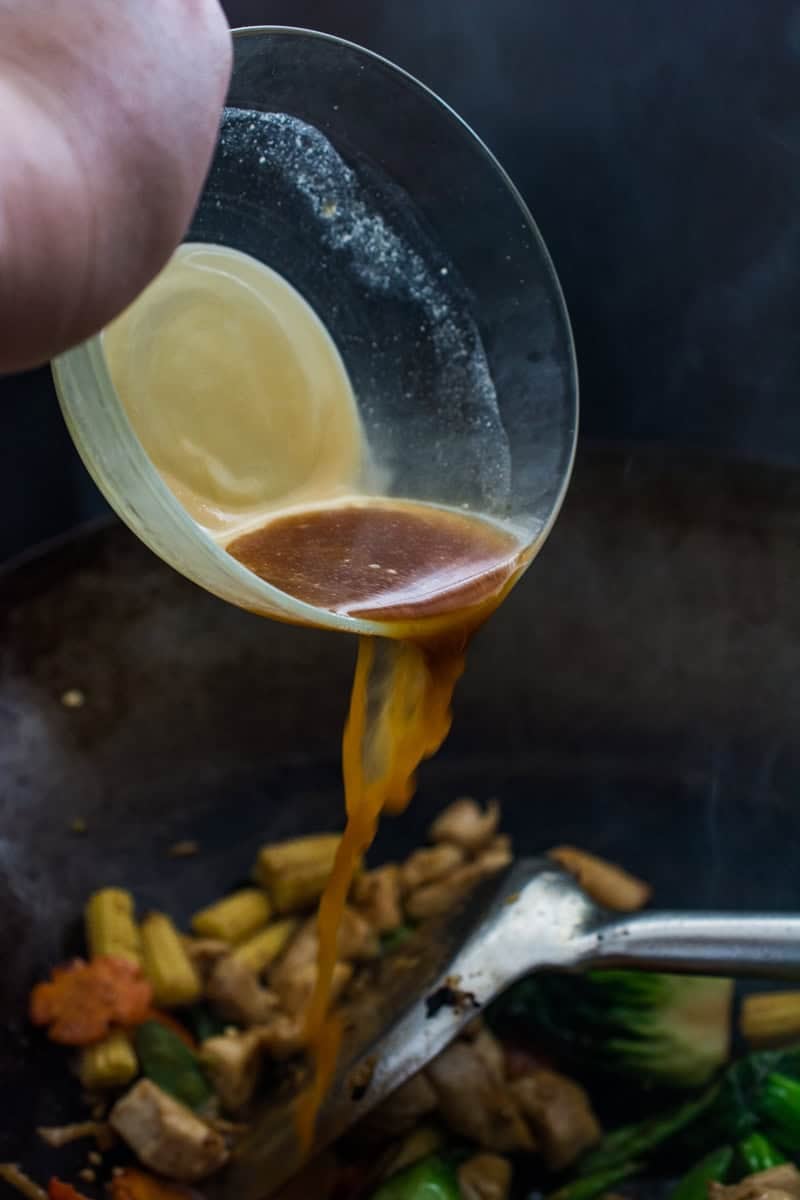
Pour your sauce over everything and toss well to coat. Once the sauce has thickened and everything is coated, get it out of the wok quickly. Ingredients left in too long will overcook.
Step 8: Plate and serve
Transfer to a serving plate and serve immediately!
Controlling the Heat
Most people think that stir-frying is always about getting the wok as hot as possible, so they crank up the heat to max and toss everything in. It's a bit more nuanced than that.
It's important to know when and how to control the heat. Pay attention to the visual cues.
Medium-high heat is a good starting point, especially for beginners. As you get more comfortable with your wok and your burner, you'll start to get a feel for when to crank it up for a good sear, and when to pull back to avoid burning.
When to increase the heat
Searing your protein means using higher heat. That is what creates that golden crust and locks in the juices. If you're making fried rice or noodles like Char Kway Teow (known for its "wok hei"), high heat is important.
When to scale back the heat
Aromatics like ginger and garlic are quite fragile, so using a lower heat when they first hit the wok helps ensure they don't burn. When I'm stir-frying vegetables only, I sometimes start with a cold wok over low heat to gently coax the flavors out of the garlic or ginger, then finish on high heat to get that final sear.
If your protein needs a bit more time to cook through, don't be afraid to lower the heat slightly rather than rushing it out of the wok undercooked but burnt on the outside.
Common Stir-Fry Mistakes (and How to Avoid Them)
Here are some mistakes I made before I figured out what was going wrong.
Not pre-heating the wok
This was my most common mistake when learning to cook. If your wok is not hot enough, your ingredients will steam instead of sear, and will likely also stick to the wok's surface. Always wait until you see the first wisps of smoke, add your oil, then sear.
Overcrowding the wok
When you add too many ingredients at once, the wok's temperature drops drastically. So instead of searing, the ingredients will start releasing moisture, causing it to steam instead of that beautiful golden sear.
If you're cooking a larger batch, cook in two rounds.
If you've accidentally overcrowded your wok, scoop everything out, including any accumulated liquid, then let the wok return to temperature before starting again with a smaller batch. You may need to add a bit of oil so the meat doesn't stick.
Skipping the mise-en-place
Once the wok is hot, there's no time to stop and chop! It's important to have everything prepped, measured, and within arm's reach before you turn on the stove.
If you're already mid-cook and realize you've forgotten something, turn off the burner, move any food in the wok to a plate, then get yourself sorted before continuing.
Frequently Asked Questions
Choose an oil with a high smoke point. Canola oil, peanut oil, and palm oil are great choices. I personally use palm oil or peanut oil.
A wok is ideal, so I highly recommend it for stir-frying. Its tall, curved sides lets you toss ingredients freely without flinging food everywhere. That being said, a large skillet or frying pan will work in a pinch.
The short answer is heat. Restaurants use powerful commercial burners that home stoves simply can't match. This high heat creates wok hei (the "breath of the wok") - that smoky, slightly charred flavor that makes restaurant stir-fries so distinctive. Restaurants also tend to be more generous with oil than most home cooks. That extra oil is part of what gives the dish that glossy, restaurant-style finish, so don't be afraid to be a bit more liberal with your oil at home.
Both use direct heat and fat or oil, but stir frying uses higher heat, a wok, and almost constant movement. Sautéing tends to be gentler and slower. Stir-frying gives you faster cooking, deeper browning, and that smoky depth of flavor you don't get from a gentle sauté.
I would recommend sticking with fresh veggies for stir-frying. Frozen vegetables carry a lot of extra moisture, and even after thawing, they tend to release more liquid, which will cause your dish to steam rather than sear.

Arleen Candiotti says
I was disappointed that you don’t like frozen stir fry veggies. I am a senior living alone and just bought a bag thinking about how much easier it would be to use. I had decided that I should ‘master; stir fries for convenience, good for watching weight etc. 🙂
Char Ferrara says
Hi Arleen! Thanks so much for your comment, and I'm so sorry if the post gave the impression that frozen veggies are off the table. That certainly wasn't my intention. They can work really well in a stir-fry, especially firmer ones like peas and carrots. I use them regularly myself in dishes with a heavier sauce where a little extra moisture isn't an issue.
The main thing to keep in mind is that frozen veggies release water as they cook, so you could try stir-frying them alone over high heat first and letting the moisture evaporate before adding the rest of your ingredients.
If you have any questions about specific vegetables you've purchased, feel free to email me (via the Contact section). I'm happy to help brainstorm the best ways to cook them!