
A Thai dessert favorite that's easier to make at home than you'd think. The sticky rice, infused with coconut milk, is rich and creamy, and pairs perfectly with the sweet, fresh mango.
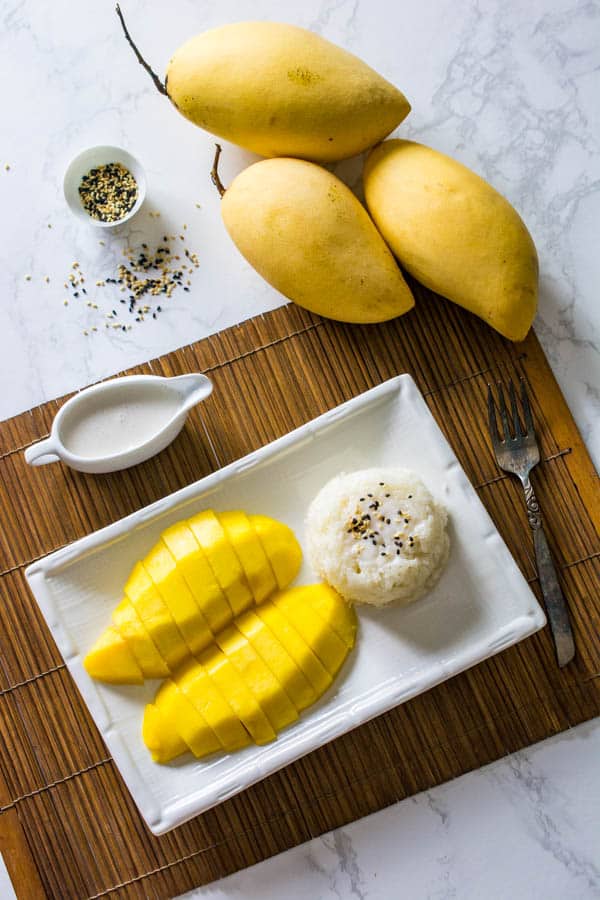
Mango with Sticky Rice is one of those desserts that looks almost too simple to be special....right? It's just sticky rice in coconut milk, paired with a ripe mango (also, rice with fruit seems like such an odd combo). But when you take your first bite, you completely understand what the hype is all about.
Thai Mango with Sticky Rice has been a staple in Southeast Asian dessert culture loooong before it became a favorite on the dessert menu in Thai restaurants across the United States. In Thailand, this is street food at its best.
I grew up enjoying this dish, and mango is still my favorite fruit to this day, so it's easy to see why this has become one of my all-time favorite Thai desserts.
But it wasn't until I moved to Oregon that a Thai cooking instructor taught me how to make this dish myself. In the past, I was intimidated by cooking glutinous rice, but I learned how easy it actually is.
Once I learned how to make the rice, I realized the real key to this dish is actually something much simpler: picking the right mango.
Choosing the Right Mango
The mango is the star of this dish, and ripeness is everything. A perfectly ripe mango brings natural sweetness and a soft, juicy texture that pairs perfectly with the creamy sticky rice.
Any variety of mango works, as long as it is ripe and sweet. When I was living in the States, I loved using Champagne mangoes for this dish. You can find them at most Asian supermarkets, and I spotted them at local grocery stores from time to time. They are smaller, but incredibly sweet, and their texture is super smooth.
Don't worry if the skin is a little wrinkly; it's actually a good sign that the fruit is ripe!
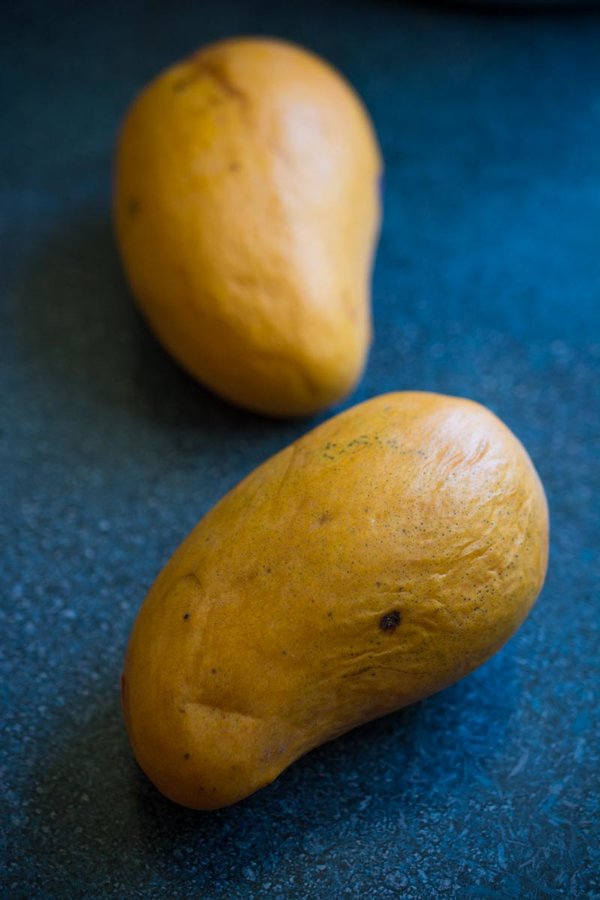
When choosing a mango, don't rely on skin color to judge ripeness. It varies widely by variety and isn't a reliable sign of ripeness. Give the mango a gentle squeeze. It should yield slightly, like a ripe avocado or peach. A sweet aroma near the stem is another really good sign it's just about ready to eat.
If your mango isn't ripe yet, leave it out at room temperature for a day or two, then refrigerate once it's ripe to keep it fresh.
I personally love my mango chilled in this dish, as the contrast with the warm sticky rice is absolutely incredible. Serving it at room temperature is also just fine. Either way, cut the mango just before serving so it doesn't dry out.
What Type of Rice to Use
The rice used for Thai Mango with Sticky Rice is not the same as the steamed white rice you would find with your everyday Asian meals.
For this dish, you'll need glutinous rice, also known as Thai Sweet Rice. You can find this at most Asian supermarkets, usually in the rice aisle.
Uncooked, glutinous rice looks more opaque than uncooked regular white rice. After steaming, glutinous rice has a very sticky, firm, chewy texture - exactly the texture you want for this dessert!
How to Steam the Glutinous Rice
Before steaming glutinous rice, it needs to soak. This recipe calls for 1 ½ cups of uncooked glutinous rice. Give the rice a good rinse, then cover it with water to soak for at least 6 hours, or overnight.
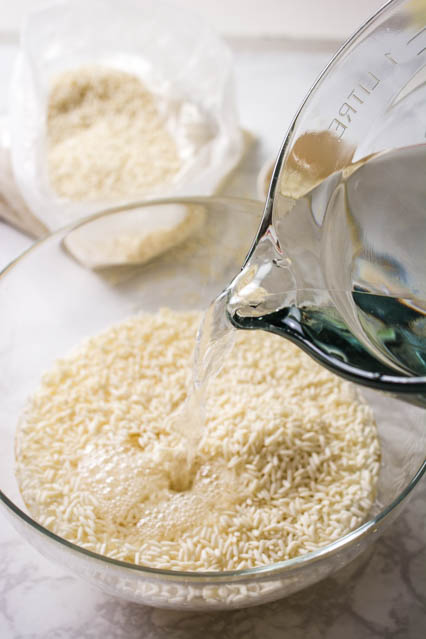
After soaking, we will cook the rice by steaming it, not boiling it. Steaming is the traditional method and gives you that chewy texture with just enough bite.
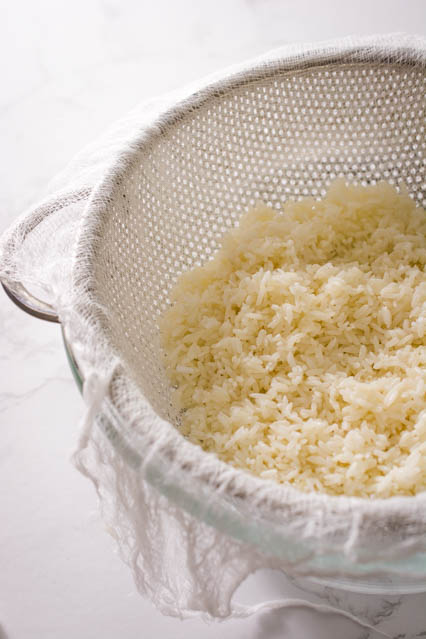
The easiest way to steam the glutinous rice is to use cheesecloth. Use at least 2-3 layers so it's sturdier and can hold the rice without breaking. The cheesecloth should be large enough to wrap and cover all of the rice.
Wrapping the rice this way helps it steam more evenly, makes it much easier to handle, and keeps cleanup simple since the rice residue won't stick to your steamer.
Line a colander with the cheesecloth, place it in your kitchen sink, then pour all of the rice onto the cheesecloth. Rinse it once more with clean tap water, then gather the cheesecloth and tie it into a bundle or fold it so the rice is secure.
Would you like to save this?
There are several options to steam the rice:
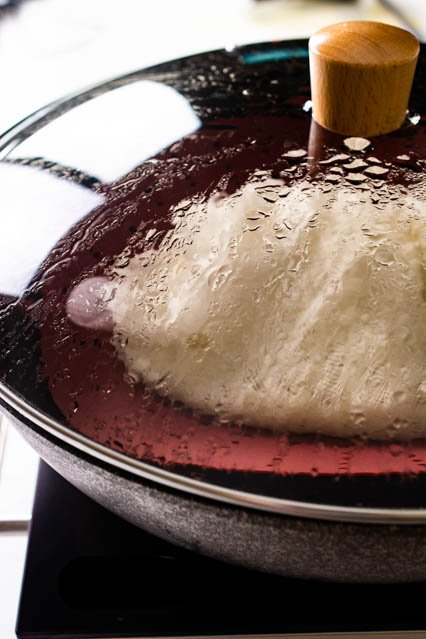
- My go-to method is using a steamer basket in a wok (mine is made from silicone). You will need a wok lid for this method.
- You could also use a bamboo steamer. It works really well and gives a very subtle earthy aroma.
- If your rice cooker has a steamer tray, put the rice in cheesecloth, then place the cheesecloth on the steamer tray. Do not cook glutinous rice the same way you'd cook regular white rice in a rice cooker.
- If you want to go all in with the authentic Thai method, you may consider this traditional Sticky Rice Steamer Pot and Basket
Once the water is boiling, cover and steam the rice for 20 minutes. When it's done, the rice should be translucent and sticky.
How to Make the Sweet Coconut Milk
While the rice steams, prepare the sweet coconut milk.
In a small pot over medium heat, simmer 1 cup of coconut milk. Add 2 ½ tablespoons sugar (palm sugar works best if available) and a pinch of salt to the coconut milk, then stir gently until the sugar and salt fully dissolve.
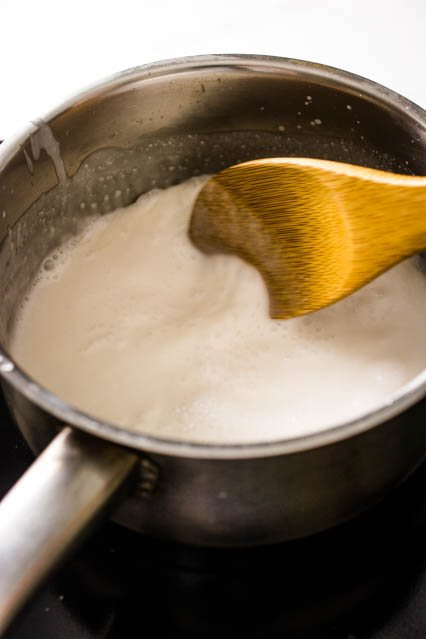
Set aside about a ¼ cup of the coconut milk mixture. This portion will be drizzled over the plated rice and mango; that finishing touch that brings the whole dish together.
Once the rice is done steaming, transfer it into a large bowl, then pour the remaining coconut milk over the warm rice.
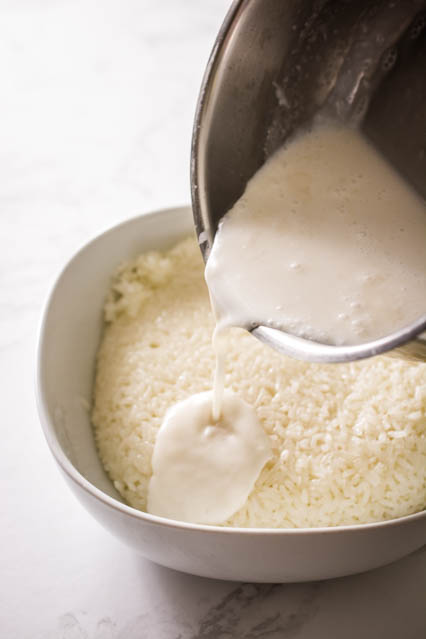
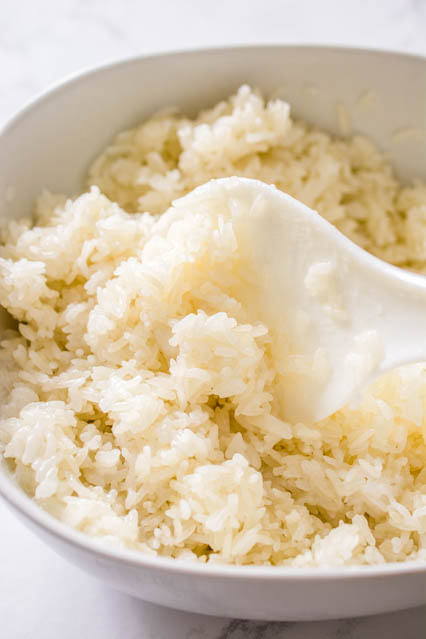
Use a rice paddle to stir the coconut milk mixture into the rice until evenly distributed. The rice will absorb the coconut milk, making it richer and creamier.
Cover the bowl with plastic wrap to prevent the rice from drying out.
Putting It All Together
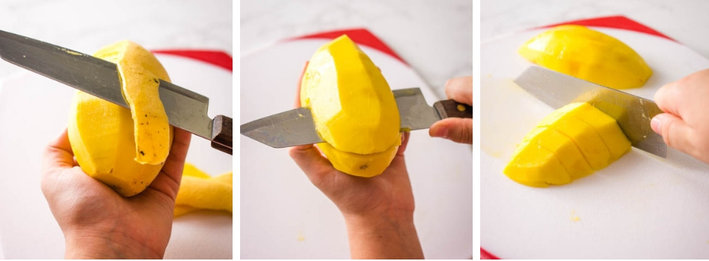
First, peel the mango.
The mango has a large flat seed running through the center. Run your knife over the seed on both sides, as close as possible, to get two large pieces. Then, slice each piece into ½-inch strips.
A mango slicer makes this process easier and safer.
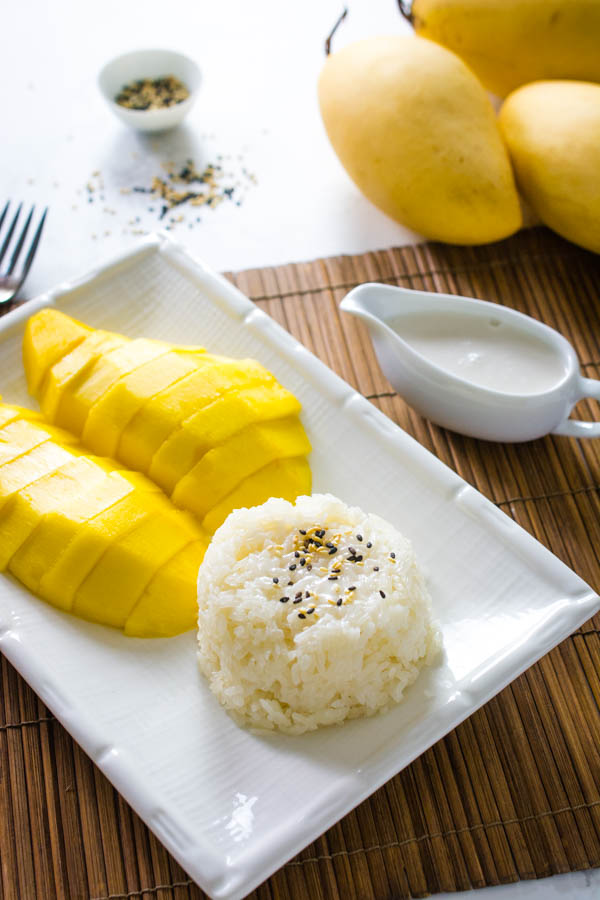
Arrange the mango slices on a serving plate alongside a scoop of coconut sticky rice. Drizzle the reserved coconut milk over the top, then finish with a sprinkle of sesame seeds over the rice.
This dessert is best enjoyed fresh while the rice is still slightly warm and the mango is cold. That temperature contrast is part of what makes this dessert sooo satisfying.
Enjoy!
PS: Looking for more mango recipes? Here are some you may enjoy!
Frequently Asked Questions
You can steam the sticky rice and mix it with the coconut milk a few hours in advance. Just keep it covered so it doesn't dry out, then gently reheat in a microwave with a splash of water just before serving.
You can also make the coconut mixture ahead (up to 1 day) and store it separately in the fridge. Give it a good stir before drizzling.
For the mango, I recommend cutting it fresh, though, since it can dry out if cut too early.
Unfortunately, no. There isn't a substitute for glutinous rice in this recipe. Regular white rice or jasmine rice is just not the same and won't be as sticky and chewy.
If you can't find it at your local grocery store, try the international aisle, your local Asian supermarket. Look for "sweet rice" or "sticky rice". You can also buy glutinous rice online.
Fresh mango is best for this recipe. Frozen mango won't have the same texture; it will be mushy once thawed and won't hold its shape.
The rice likely didn't soak long enough (at least 6 hours) or steam long enough. If it's still too firm after 20 minutes of steaming, give it a few more minutes, checking it from time to time, until the rice looks translucent and feels tender.
Store the sticky rice and mango separately in airtight containers in the fridge. The rice will firm up when it's chilled. To soften it, steam it briefly or microwave it with a splash of water. Both the rice and mango will only keep a day or two, but this dessert is best eaten fresh.
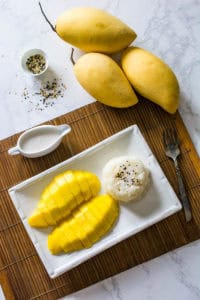
Thai Mango with Sticky Rice
Ingredients
- 1 ½ cups glutinous rice uncooked
- 1 cup coconut milk
- 2 ½ tablespoons palm sugar or regular sugar
- 1 pinch salt
- 4 mangoes cut into slices or cubes
- sesame seeds for garnish
Instructions
- Soak the glutinous rice for at least 6 hours, up to overnight.
- Steam the rice for 20 minutes: Place uncooked rice in cheesecloth, rinse, then steam using any type of steamer.
- In a small saucepan or pot, heat coconut milk over medium heat. As it starts to boil, add the sugar and salt. Stir till the sugar and salt have dissolved. Set aside about ¼ cup of the coconut milk mixture for serving later.
- Place the steamed glutinous rice into a large mixing bowl. Pour the remaining coconut milk over the rice. Stir until evenly distributed.
- Serve the mango and the sticky rice together. Garnish with sesame seeds. Drizzle the additional coconut milk onto the rice or mango if desired.


[…] buying the right type of rice. Glutinous rice is extremely sticky and used for dishes like Thai Mango and Sticky Rice. It is not used for everyday […]