

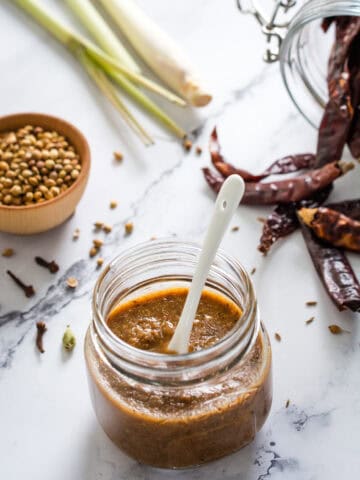
This Thai Yellow Curry Paste comes together fast and delivers rich, authentic flavor. Perfect for restaurant-quality Thai curries at home.
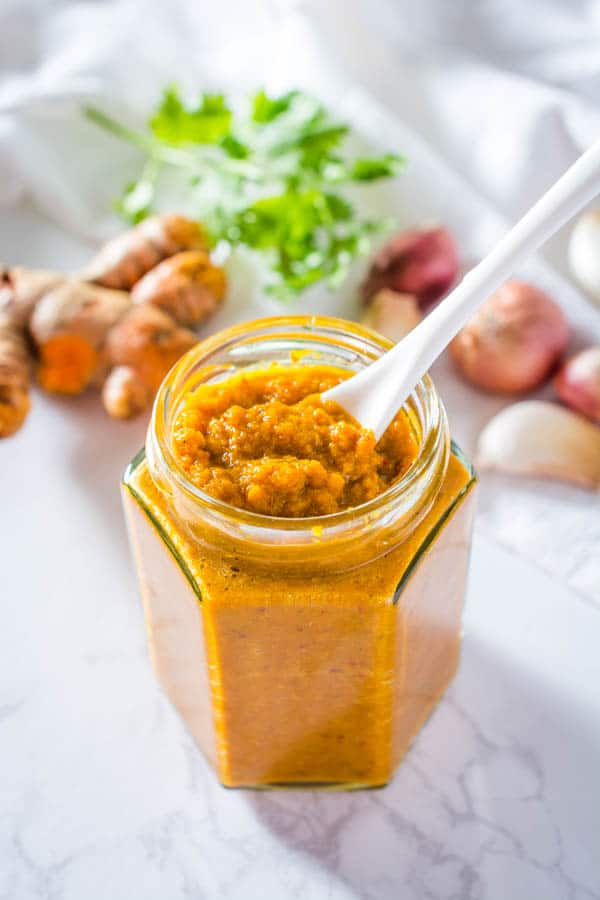
Curries are such a big part of Thai cuisine, each with its own distinct flavor and personality.
Thai Red Curry gets its deep color and flavor from dried red chilies, while Thai Green Curry uses fresh green chilies for that bright, herbal kick.
Thai Yellow Curry, on the other hand, gets its warm golden hue and earthy aroma from turmeric. Yellow Curry is milder than red or green curry but just as flavorful, and it works beautifully with chicken, fish, potatoes, or mixed vegetables.
Making your own curry paste at home might sound intimidating, but it’s actually quick and simple once you’ve got the ingredients ready. Just a few minutes in the blender, and you’ll have enough paste for several delicious meals throughout the week.
You’ll also find some recipe ideas and storage tips below to help you get the most out of your homemade paste.
How to Make Homemade Yellow Curry Paste
The traditional method of making Thai curry paste involves using a mortar and pestle to blend all the ingredients to a smooth paste by hand.
Although it yields authentic flavor and texture, using modern appliances like blenders and food processors can save a lot of time and effort.
For the smoothest texture, use a blender instead of a food processor Even the Magic Bullet blender works quite well for this task.
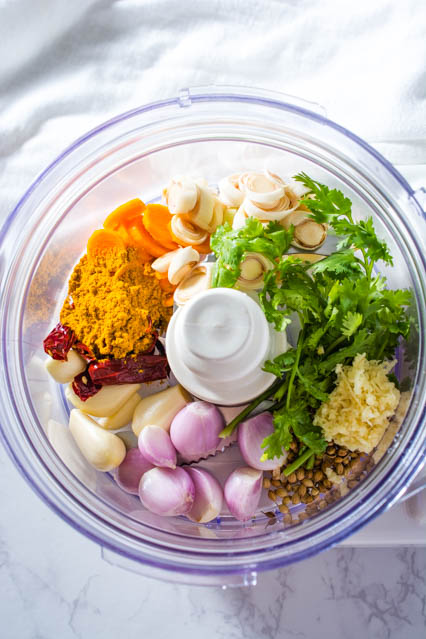
Rinse and soak 3 dried red chilis in warm water for about 30 minutes.
After they have soaked, cut them into ½-inch pieces. As you cut the chili, shake the seeds out of each piece over the kitchen sink (to prevent the seeds from flying everywhere in your kitchen). Removing the seeds will also reduce the spice.
Place the red chilies and the following ingredients into a food processor or a blender:
- 2 inches of fresh turmeric (peeled and sliced) or 1 ½ tablespoons of turmeric powder
- 1 inch galangal, grated (or substitute with an equal amount of ginger if you don't have access to galangal)
- 3 lemongrass stalks (white portion only, thinly sliced)
- 5 small shallots, peeled
- 5 cloves garlic, peeled
- 3 stalks fresh cilantro
- 1 tablespoon curry powder
- 1 tablespoon coriander seeds
- 1 tablespoon Thai shrimp paste (optional but recommended)
- Have approximately 1 cup of water handy, but don't add it to the mix yet.
Tip: Lightly toast the coriander seeds for a minute over low heat to amp up those flavors!
Pulse the blender or food processor a few times, then slowly stream the water into the mix to blend the ingredients to a paste.
The purpose of the water is to help the blender or food processor blend the ingredients. As soon as the curry paste is blended evenly, stop adding the water. I typically use between ½ cup and ¾ cup of water for each batch.
This recipe yields approximately 1 cup of Yellow Curry Paste.
Storing Yellow Curry Paste
Your homemade Yellow Curry Paste will keep for a week in the fridge, or in the freezer for about 6 months.
Would you like to save this?
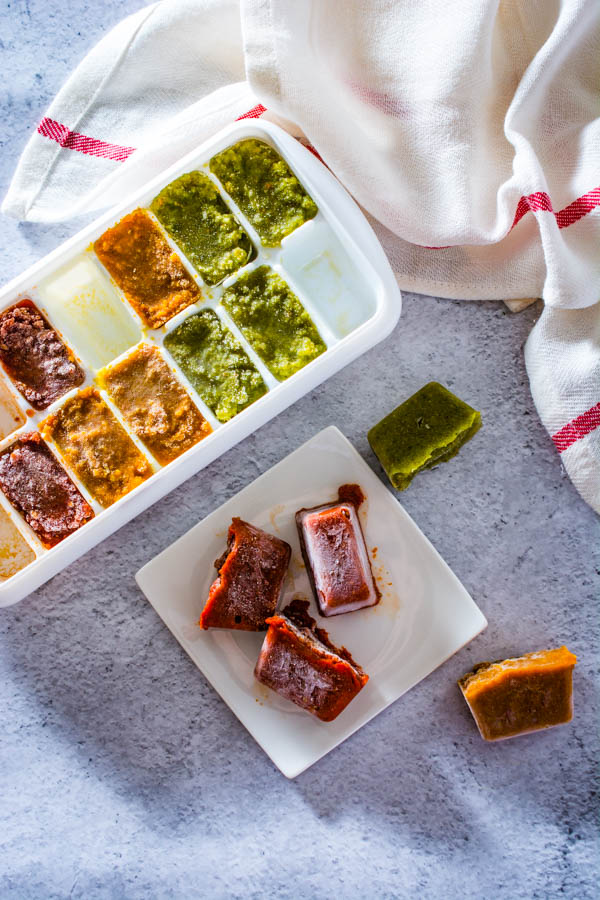
When freezing any curry paste, I recommend freezing them in ice cube trays. Ice cube trays that come with lids are super handy for this purpose as you can easily stack them on top of one another.
Most Thai curry recipes call for approximately 2 -3 tablespoons of curry paste. If you pour about 1 tablespoon of curry paste into each section of the ice cube tray, you'll be able to easily take exactly what you need for each recipe you prepare.
1 cup = 16 tablespoons, so you will get about 16 individual frozen Yellow Curry Paste cubes per batch.
Store these cubes in the ice cube trays (with the lids on), or to save freezer space, place the frozen curry paste cubes into a Ziploc bag.
When you’re ready to cook, just pop out a few cubes and let them thaw in a small bowl at room temperature, or microwave them for about a minute until softened.
💡 Pro Tips for the Best Thai Yellow Curry Paste
Use fresh ingredients whenever possible. Fresh turmeric, galangal, and lemongrass make a difference in flavor and aroma. If you’re using powdered turmeric or ginger instead, the paste will still be delicious, just slightly less vibrant.
Toast your spices. Lightly toasting the coriander seeds in a dry pan for a minute or two brings out their aroma and adds a deeper flavor to the paste.
Adjust the spice level. Thai Yellow Curry is typically milder than red or green curry, but you can add a few extra red chilies (with their seeds intact) if you like extra heat.
Blend in stages if needed. If your blender struggles to catch all the bits, stop and scrape down the sides, or blend the ingredients in batches, for a smooth paste.
Don’t skip the shrimp paste. It adds a subtle depth and authentic umami flavor. If you prefer to keep it vegetarian, try adding a dash of soy sauce or a bit of miso for richness.
Freezing for storage. Freeze your curry paste in 1-tablespoon portions using lidded ice cube trays or small containers for easy storage. They stack neatly and keep your freezer from smelling like curry.
Frequently Asked Questions
Yes! Shrimp paste adds a lovely depth of flavor, but if you prefer a vegetarian version, just leave it out. You can also add a touch of soy sauce or miso for an extra umami flavor.
If you can’t find galangal, use the same amount of fresh ginger. The flavor isn’t identical (galangal is a bit more citrusy and peppery), but ginger is a good substitute.
Absolutely. Use about 1 ½ tablespoons of turmeric powder for every 2 inches of fresh turmeric root. The flavor will be slightly less earthy, but the color will still be vibrant.
It’s one of the milder Thai curry pastes. Removing the chili seeds keeps it gentle, but you can always adjust the heat by adding or keeping a few seeds and adding a few more chilies.
Your curry paste will keep for up to a week in the fridge, or about six months in the freezer when stored properly in an airtight container or ice cube tray.
Most Thai curry recipes use about 2 to 3 tablespoons of curry paste for a dish that serves four. You can always start with less, then add more to taste as it simmers.
Other Homemade Thai Curry Paste Recipes:
Yellow Curry Recipes to Try:
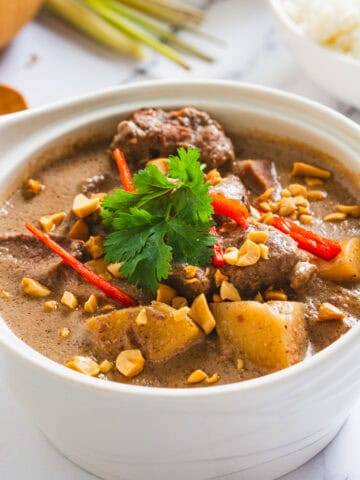
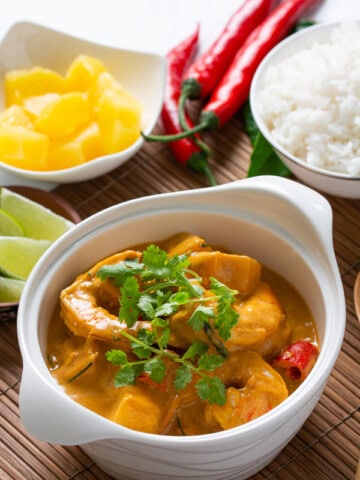
Try these Yellow Curry recipes with your new homemade paste!
- Vegetarian Thai Yellow Curry
- Roasted Thai Yellow Curry Potatoes
- Thai Yellow Chicken Curry with Potatoes by Pinch of Yum
- Thai Pork and Pineapple Yellow Curry by Daily Cooking Quest
- Easy Thai Yellow Curry With Fish by Kitchen Sanctuary
- Thai Yellow Curry with Veggies, Cashews and Tofu by The Picky Eater
Thai Yellow Curry Paste
Ingredients
- 3 dried red chili
- 2 inches fresh turmeric peeled and sliced (or 1 ½ tablespoons turmeric powder)
- 1 inch galangal grated (or fresh ginger)
- 3 stalks lemongrass white portion only, thinly sliced
- 5 small shallots peeled
- 5 cloves garlic peeled
- 3 stalks cilantro
- 1 tablespoon curry powder
- 1 tablespoon coriander seeds
- 1 tablespoon Thai shrimp paste optional but recommended
- 1 cup water
Instructions
- Rinse and soak the dried red chili for 30 minutes. After they have soaked, cut the chili into ½ inch pieces.
- Place the red chili in a blender or food processor, followed by the turmeric, galangal, lemongrass, shallots, garlic, cilantro, curry powder, coriander seeds, and Thai shrimp paste (if using)
- Pulse it a few times, then slowly add about a tablespoon of water at a time to blend the ingredients to a paste. (As soon as you get the consistency you want, stop adding water).
Dawn Dauzat says
I have never even tried Thai food, but it does sound and looks appealing. I am going to try some. Got my ingredients today and will make some soon.
Char says
Thai food is so flavorful. I hope you enjoy it, Dawn! 🙂 Feel free to reach out if you have any questions!
Kathi says
The recipe calls for 3 teaspoons of coriander seeds, which should be the same as one tablespoon? Wasn’t sure if maybe it was supposed to be 3 tablespoons?
Char says
Hi Kathi! Thanks for bringing this up..you are right! It's 1 tablespoon. Sorry for the confusion! I've adjusted the blog post and recipe card accordingly. Thanks again!
Kathi says
One more question. Just made this and it seems bitter by itself. Should it be? Getting ready to add it to my curry stew but afraid I’ve messed something up…?
Char says
It could be a bit on the bitter side when tasted by itself. Once you add the other curry ingredients, the bitter flavor should mellow out. I hope your curry turns out to be delicious!