

This easy Thai Tom Yum paste is a simple, from-scratch base you can use in more ways than just soup. Made with simple ingredients, it blends up quickly and keeps well, so you can add a punch of flavor to soups, noodles, stir-fries, and other quick meals anytime.
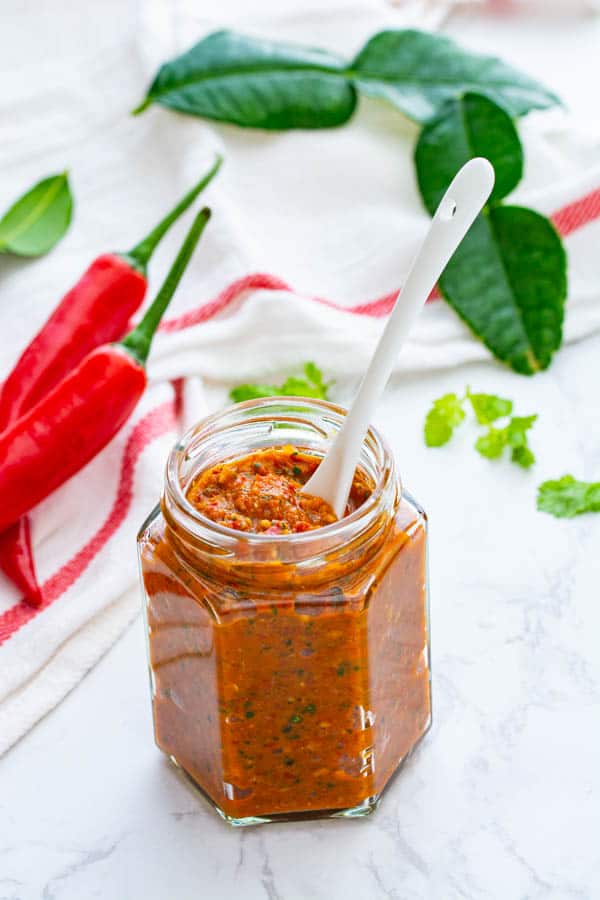
Tom Yum is one of the most iconic Thai flavor profiles. Sour, spicy, and super aromatic. When I think of Tom Yum, soup is usually the first thing that comes to mind, but those same flavors work in many other ways too.
Making Tom Yum paste at home means you don’t have to start from scratch every time you want that hot-and-sour kick. Keep a batch in the fridge or freezer, then use it as a base for Tom Yum soup, or work it into your noodles, fried rice, or simple stir-fries during the week.
I’ve used this paste in shrimp stir-fries, tossed it with cashew nuts for a spicy snack, and even rubbed it onto chicken before grilling or roasting. It’s one of those pastes that ends up getting used more than you expect.
What is Tom Yum Paste?
Classic Tom Yum soup is traditionally made by simmering aromatics like lemongrass, galangal, makrut lime leaves, tamarind, and Thai chilies to build a fragrant, hot-and-sour broth. These ingredients need time to infuse the liquid, which is what gives Tom Yum soup its signature depth.
Tom Yum paste takes those same core flavors and blends them into a concentrated, ready-to-use base. Instead of starting from whole aromatics each time, you can keep the paste on hand and use it whenever you want that familiar Tom Yum flavor.
When you’re short on time, this paste makes it easy to put together a pot of Tom Yum Soup in just minutes. Just add chicken stock and a few simple ingredients for a clear, comforting Tom Yum Goong, or stir in some coconut milk for a creamy Tom Yum Nam Khon. It also works well as a flavorful base for hot pot stock.
How to Make Thai Tom Yum Paste
This paste is made with a mix of fresh and dried chilies, aromatics like lemongrass and galangal, and a few pantry staples that give Tom Yum its signature sour and spicy balance.
Start by soaking 10 - 15 dried red chilies in a bowl of warm water for about 15 minutes.
In a separate small bowl, soak 1 tablespoon of tamarind paste in ¼ cup of warm water.
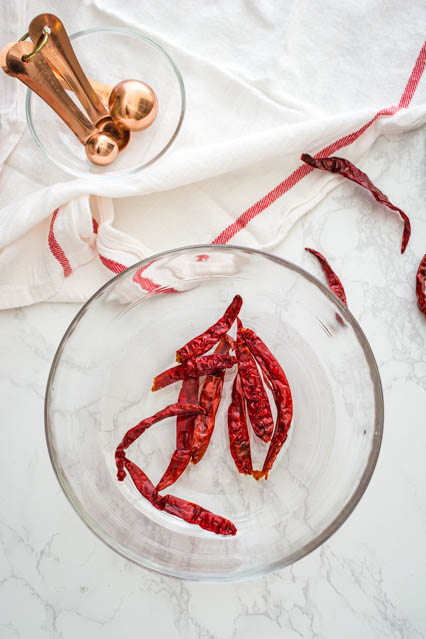
Once the chilies are soft, slice them into about 1-inch pieces. To control the heat, rinse out some or all of the seeds as you cut them. I find it easiest to do this near the sink with a gentle stream of running water.
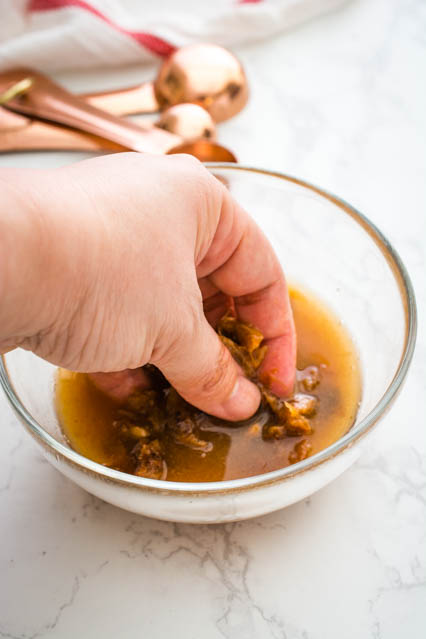
Next, gently squeeze the soaked tamarind paste with your fingers to extract the juice, then discard the pulp and any seeds. Set the tamarind juice aside.
Would you like to save this?
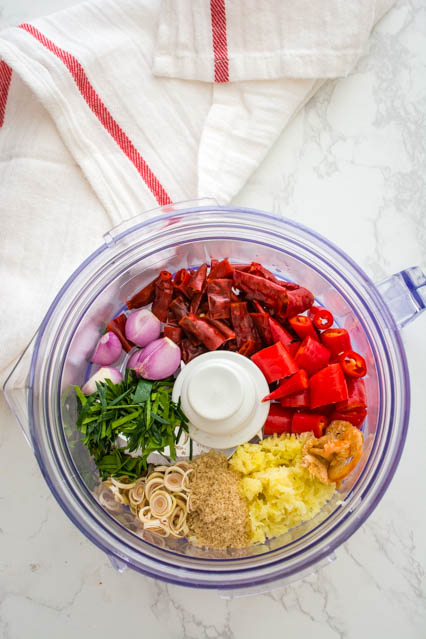
Add the following ingredients into a food processor or blender:
- Tamarind juice (from the soaked tamarind paste)
- 10–15 dried red chilies (soaked, sliced, seeds removed)
- 3 fresh red chili peppers (sliced into ¼-inch pieces)
- 3 stalks lemongrass (white portion, thinly sliced)
- 5 small shallots
- 1-inch piece of galangal (grated)
- 5 makrut lime leaves (stems removed, julienned)
- 2 tablespoons brown sugar
- 2 tablespoons coconut oil
- 1 tablespoon dried shrimp (optional)
- 1 cup fresh cilantro leaves
Blend everything until you have a smooth paste, scraping down the sides as needed. The paste doesn’t need to be perfectly smooth; a little texture is normal.
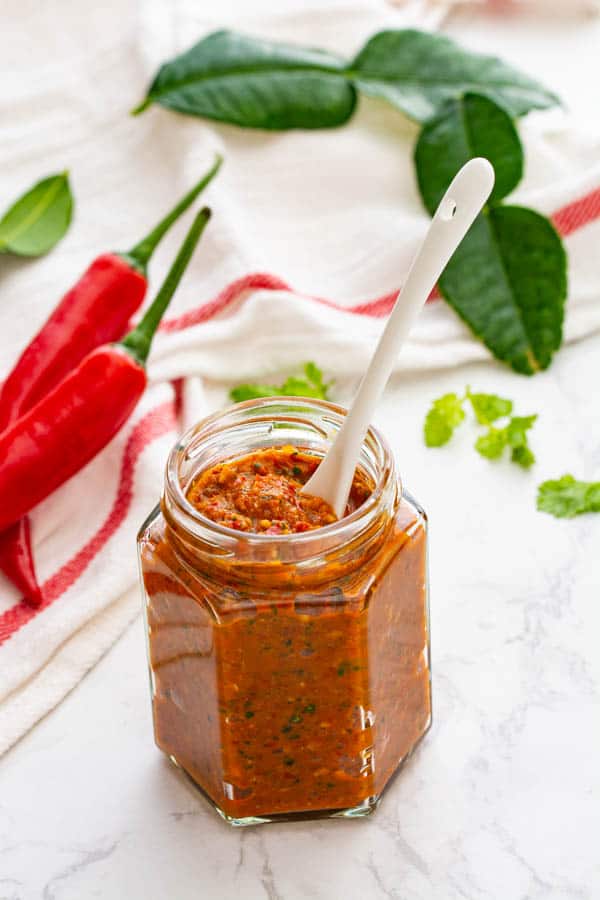
This recipe makes about 1 cup of Tom Yum paste. Since most dishes only use 1 to 2 tablespoons at a time, one batch will last for several meals.
Creative Ways to Use Tom Yum Paste
Once you have this paste on hand, it’s easy to work Tom Yum flavor into more than just soup. I use it as a shortcut ingredient in all kinds of dishes, especially when I want something quick but still full of flavor.
- Thai Tom Yum Shrimp Stir-Fry
- Thai Tom Yum Roasted Cashews
- Thai Tom Yum Chicken
- Tom Yum Noodle Soup by Roti n Rice
💡 Pro Tips for the Best Homemade Tom Yum Paste
- Adjust the heat as you go.
The spice level depends a lot on the chilies you use and how many seeds you leave in. Start by removing most of the seeds, then adjust next time once you know how spicy your chilies are. - Slice aromatics thinly for easier blending.
Lemongrass and galangal can be fibrous. Slicing them very thinly before blending helps your paste come together more smoothly, especially if you’re using a standard blender. - Don’t worry about a perfectly smooth texture.
Tom Yum paste doesn’t need to be ultra-smooth like some curry pastes. A little texture is normal and actually works well once the paste is cooked into soups or stir-fries. - Freeze in small portions for convenience.
Freezing the paste in tablespoon-sized portions makes it easy to use straight from the freezer, whether you’re cooking soup, noodles, or a quick stir-fry.
Frequently Asked Questions
Store Tom Yum paste in an airtight container in the refrigerator for up to 1 week. For longer storage, freeze it for up to 6 months. I recommend freezing them in ice cube trays (1 tablespoon in each cube) for convenience. You’ll be able to take and thaw just the right amount that you need.
Dried red chilies add a deeper, more rounded heat, while fresh red chilies bring a brighter, sharper spice. Using both creates a more balanced and layered flavor, which is what gives Tom Yum paste its signature character.
If the paste is too thick or your blender struggles, add a small splash of hot water, tamarind juice, or coconut oil to loosen it. Blend again, stopping to scrape down the sides as needed, until the paste moves smoothly.
Making Tom Yum paste at home gives you full control over the ingredients, heat level, and overall balance. The flavors tend to be fresher and more aromatic, and you can adjust the sourness or spice to suit your taste. It’s also a practical way to keep a versatile Thai flavor base on hand for quick meals.
Other Thai Curry Paste Recipes
Thai Tom Yum Paste
Ingredients
- 10 - 15 dried red chilies
- 1 tablespoon tamarind paste
- 3 fresh red chilies sliced into ¼ inch pieces
- 3 stalks lemongrass white portion only, thinly sliced
- 5 small shallots peeled
- 1 inch galangal grated (ginger can be substituted)
- 5 makrut lime leaves stems removed and thinly sliced
- 2 tablespoons brown sugar
- 2 tablespoons coconut oil
- 1 tablespoon dried shrimp optional
- 1 cup cilantro leaves
Instructions
- Soak the dried red chilies in a bowl of warm water and the tamarind paste in a separate bowl with ¼ cup of warm water. Let both soak for about 15 minutes, until the chilies soften and the tamarind loosens.
- Once softened, slice the dried chilies into 1-inch pieces, removing the seeds as you go to control the heat.
- Gently squeeze the soaked tamarind with your fingers to extract the juice, then discard the pulp and any seeds. Set the tamarind juice aside.
- Add the tamarind juice, soaked dried chilies, fresh red chilies, lemongrass, shallots, galangal, makrut lime leaves, brown sugar, coconut oil, dried shrimp (if using), and cilantro leaves to a blender or food processor.
- Blend until a smooth paste forms, stopping to scrape down the sides as needed. The paste doesn’t need to be perfectly smooth. A little texture is normal.

Zahida says
I will definitely try this recipe. Thank you for sharing 🙂
Char says
Thank you, Zahida! I hope you enjoy the recipe!
Lhyn jawjali says
I want to learn how to make paste tom yum
Char says
It's really easy! I hope you give the recipe a try 🙂
Ameen shaikh says
@Charwill try at may home,
Char says
Great! Let me know what you think!
Kriti says
The recipe came out so well. Tried it without the shrimps since I have vegetarians at home and it’s delicious. Thank you
Char says
I'm so glad that you enjoyed it, Kriti! 🙂
Michael Pek says
May I know where can I buy Tom Yum Paste in Thailand?
Char says
Hi Michael! you should be able to find Tom Yum Paste in most grocery stores/supermarkets in Thailand.