

Siew Yoke has been on my family's table for as long as I can remember. There's nothing quite like that moment when you bite through the crackling skin into tender, fragrant pork belly seasoned with five-spice and Chinese rose wine. Growing up, I always assumed this was restaurant-only territory… well, it's not, and this recipe is proof
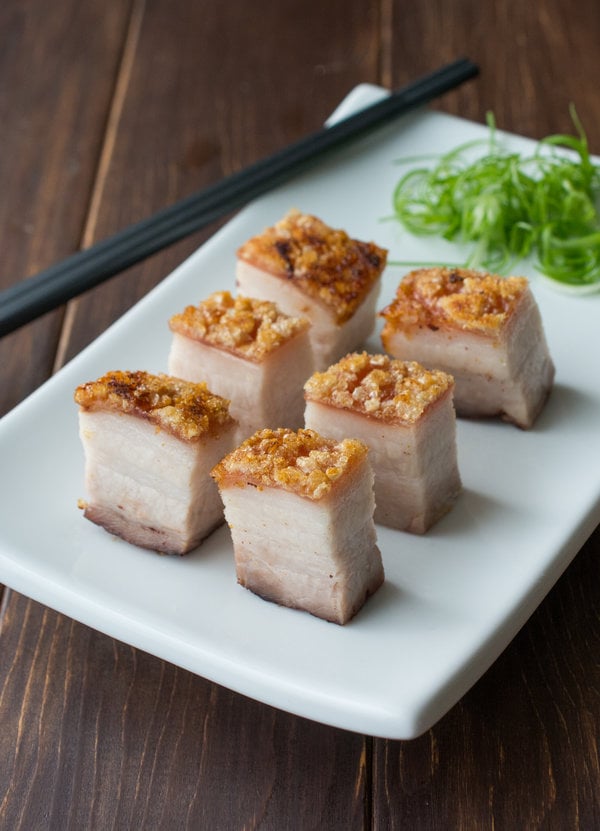
Take a walk down Chinatown in any part of the world, and you'll very likely see Crispy Roasted Pork Belly hanging in racks alongside Char Siu (Chinese BBQ Pork) and Roasted Duck displayed in Chinese restaurant windows.
Known as Siew Yoke or Siu Yuk, this crispy roast pork belly is one of the most popular among Chinese roast meats, and it has been a staple at my family's table for as long as I can remember. In the Hokkien dialect, we call it Sio Bak.
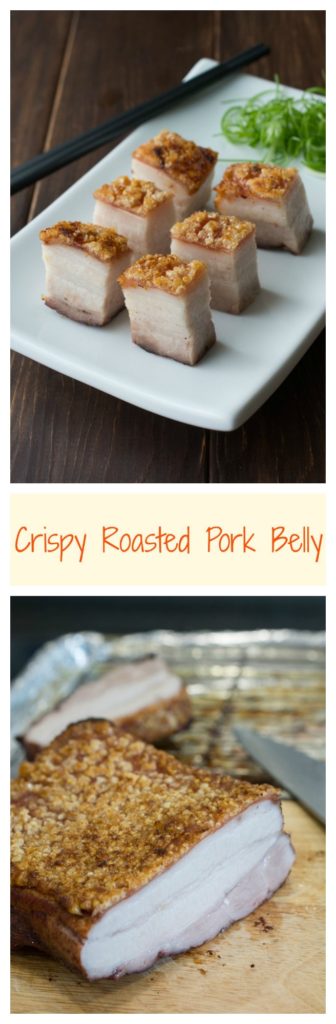
The skin on the roasted pork belly is super crispy and crackling, while the meat underneath is very tender and oh-so-flavorful.
This very popular Cantonese dish is often served with rice, but it can also be enjoyed on its own (dipped in a little bit of Chinese-style hot mustard , of course!)
While it might look like something only a Chinatown restaurant chef could pull off, I promise you, it is absolutely doable at home!
Crispy Pork Belly Around Asia
Crispy roast pork belly appears across many Asian cuisines, but each version has its own personality. For example, the Vietnamese version is a bit sweeter with a bit of honey and hoisin sauce, while the Filipino Lechon has vinegar and garlic.
The classic Cantonese version uses a simple rub of salt, five-spice powder, white pepper, and Shaoxing wine.
In my family's Malaysian-Chinese version, we swap the Shaoxing wine for Chinese rose wine (Mei Kwei Lu Jiu). It gives the meat a lighter, more fragrant quality that I personally really love with pork! It can be a little tricky to find, so Shaoxing wine works perfectly as a substitute; but if you spot Mei Kwei Lu at your Asian supermarket, grab it!
Choosing the Perfect Pork Belly
The piece of pork belly you buy will make a huge difference to how well this dish turns out, so it's okay to be a little bit picky at the butcher or Asian supermarket!
Here's what to look for:
- A 2.5 pound piece will serve 8-10 people as part of a meal. Planning for a large crowd? Go for 3 - 4 pounds; just cut it in half for easier handling and even cooking.
- Skin-on is non-negotiable. You can't have crispy crackling pork belly skin...without the skin! You should be able to find skin-on pork belly at your local Asian supermarket if your regular grocery store doesn't carry it.
- Look for even layers. The ideal piece has about 5 visible alternating layers of lean meat and fat (known in Cantonese as ng fa yuk). Even layers mean the fat renders evenly, keeping the meat juicy and tender.
- Avoid overly fatty cuts. Some fat is essential, but too much will make your Siew Yoke too greasy. Look for a good balance of meat to fat.
- Check the skin. Look for smooth, even skin without thick or uneven patches. The more uniform the skin, the more evenly it will crackle.
Here's How to Make Chinese Crispy Pork Belly at Home!
Start by scraping the skin with a small knife to remove any impurities, then remove any stray hairs with a pair of clean tweezers. Give the pork belly a good rinse and set it aside.
Step 1: Blanch the Skin
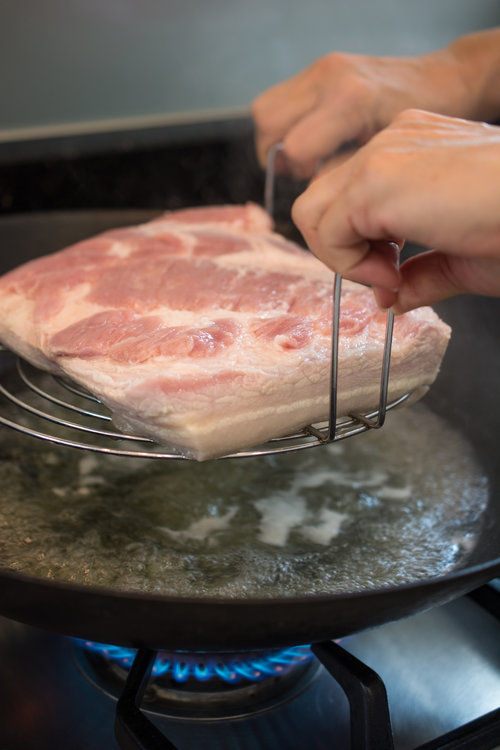
Boil some water in a wok or a large shallow frying pan. Your pan should be large enough to fit the entire pork belly piece. When the water reaches a rolling boil, slowly lower the pork belly, skin-side down, into the water, then remove it after about 10 seconds.
I like to use a steaming rack turned upside-down to handle the pork belly in the water. If you don't have a Steaming Rack, you can also use a pair of forks (one in each side of the pork belly), or a strong, sturdy spatula works just as well.
This quick blanching step is the secret to easier, more effective skin-piercing in the next step. It softens the skin just enough to pierce it easily, giving you more holes and, ultimately, better crackling.
Step 2: The Secret to Perfectly Crackling Skin
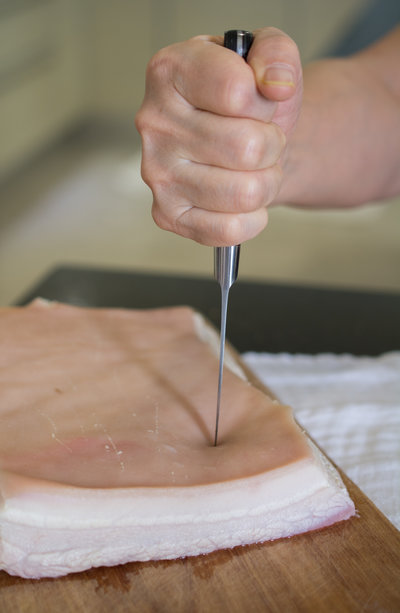
Here's where the magic happens. The secret to that gloriously blistered, shatteringly crispy crackling skin? Lots and lots of tiny holes.
Using a sharp pointed knife...or better yet, a meat tenderizer with spikes, poke holes across the ENTIRE surface of the skin. The more holes, the better.
Yes, it's a little tedious, but I promise your hard work will pay off! Just be careful to puncture the skin only, not the meat underneath.
Why do the holes create crackling?
During the roasting process, the fat just underneath the skin heats up and needs somewhere to go. These tiny holes on the skin's surface allow rendered fat and moisture to escape, rather than getting trapped and steaming the pork from underneath (which will also make the skin rubbery instead of crispy).
As the fat escapes through the holes, it bastes the skin in hot oil, creating those gorgeous bubbles and blisters that shatter as you bite into them.
The more holes you have, the more evenly the skin will crackle.
Would you like to save this?
Step 3: The Marinade
In a small bowl, mix your marinade ingredients:
- ¾ teaspoon of Chinese 5-spice powder

- 1 tablespoon of Chinese rose wine (or Shaoxing wine)
- ¼ teaspoon of ground white pepper
- 1 teaspoon of salt


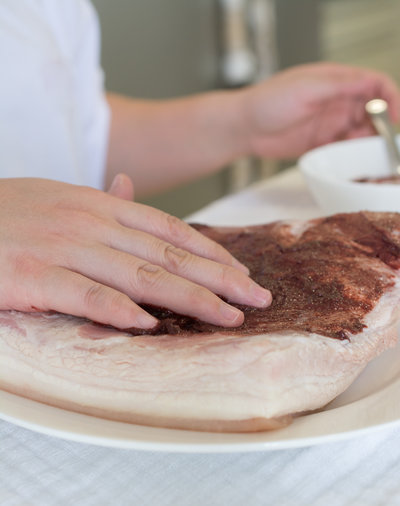
Mix all these ingredients into a paste, then rub it evenly all over the meat side of the pork belly, including the sides. Don't rub it on the skin!
As soon as you've applied the marinade, put the pork belly on a plate (skin side up, uncovered) and let it sit in the fridge for at least 30 minutes, or overnight if you have the time. The longer it marinates, the deeper the flavor and the drier the skin gets, which means even better crackling!
Step 4: Roasting Time
Preheat your oven to 375°F.
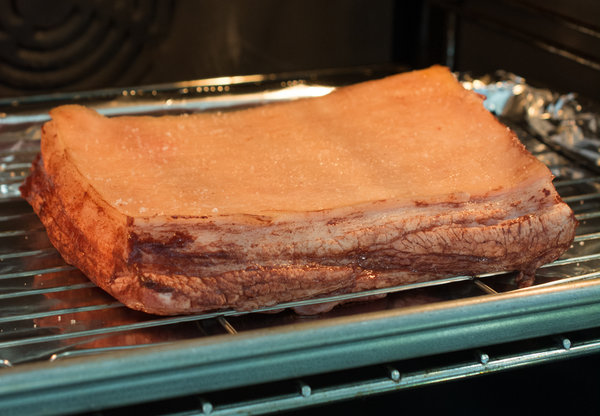
Line a baking sheet with aluminum foil, then place a wire rack on top of the baking sheet. Place the pork belly on top of the wire rack. This will allow the oil to drip from the meat (and make clean-up a breeze!)
Before putting it in the oven, rub ½ a teaspoon of salt onto the pork belly skin. Place the pork belly in the oven on the center rack, and let it roast for 40 minutes.
Step 5: Watch it crackle!
Now, the fun part! This is where all of your hard work pays off. We're gonna watch the skin crisp up and crackle!
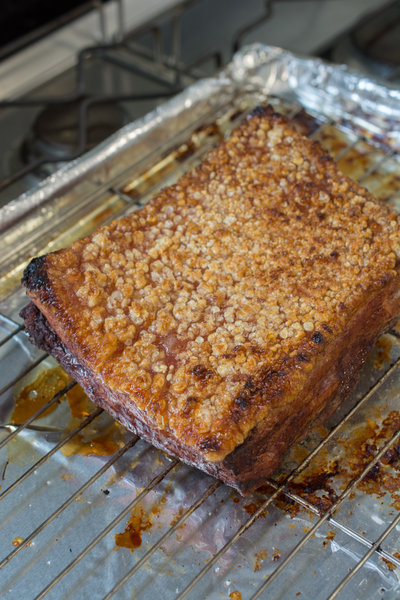
Take the pork belly out of the oven and move the oven rack up closer to the broiler. Put the pork belly back into the oven, then increase the temperature to 450°F. Keep some aluminum foil handy so you can cover any parts that start to burn too quickly.
After just a few moments, you'll see the pork belly skin start to bubble and blister. So fun and satisfying to watch 🙂
This process takes about 10 minutes, but keep a very close eye on it the entire time, as it can go from perfectly golden brown to burnt very quickly!
As soon as the entire skin surface is golden brown and all bubbly and blistered, it's time to take it out of the oven.
Step 6: Rest, Cut, and Serve
If any parts of the skin have caught a little too much color, simply scrape off the charred bits with a knife. The crackling underneath will still be delicious!
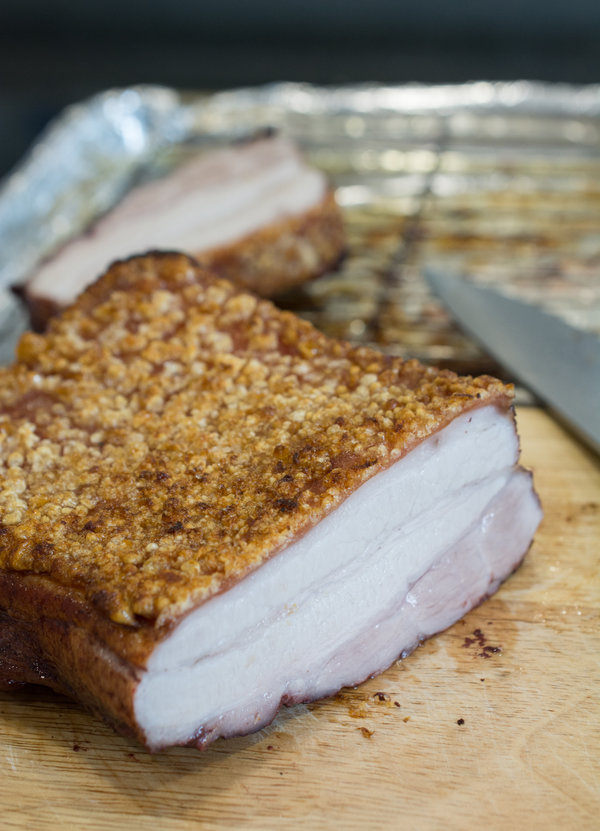
I know it's tempting to dig in right away, but it's important to let the pork belly rest for about 15 minutes before cutting. This allows the juices to redistribute through the meat, keeping it juicy and tender.
When you are ready to cut, place the pork belly skin-side down and cut through the meat toward the skin. This prevents the crackling from shattering everywhere and gives you much cleaner, neater pieces.
📌PRO TIP: When cutting the pork belly, only cut what you plan to serve immediately. Store the remaining pork belly as a whole block. It's much easier to store, keeps better, and you'll get much crispier results when reheating. Simply slice off portions as you need them!
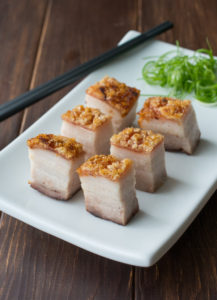
Serve with steamed white rice and a bit of Chinese Style Hot Mustard.
Enjoy!
Frequently Asked Questions
Allow the pork belly to cool completely, then store in an airtight container in the fridge for up to 5 days. When you're ready to enjoy it again, reheat using one of these methods:
1) Air fry at 375°F for 5–8 minutes
2) Place the pork belly skin side up on a wire rack at 375°F for 10 - 15 minutes until warmed through and the skin is crispy again.
You could also microwave it, but the skin would likely not be very crispy.
Yes! Siew Yoke freezes surprisingly well. Wrap the cooled pork belly tightly in aluminum foil, then place in a freezer-safe bag or container. It will keep in the freezer for up to one month. Thaw overnight in the fridge before reheating.
Leftover Siew Yoke is incredibly versatile! Chop it into smaller pieces and toss it into fried rice or fried noodles, or slice it up and stir-fry with ginger, garlic, a splash of dark soy sauce, and a touch of sugar for a quick and delicious weeknight meal.
This is the most common Siew Yoke problem, and it almost always comes down to one of these things:
* Not enough holes were poked. More holes = more escape routes for moisture and fat = better crackling. Be generous with this!
* The oven temperature wasn't high enough for the final stage. Make sure you crank it up to 450°F and move the rack closer to the broiler.
* The pork belly was too thick or uneven. Uneven pieces mean some parts crisp up before others. Cutting the pork belly in half before cooking helps ensure more even results.
Chinese Crispy Roasted Pork Belly (Siew Yoke/Siu Yuk)
Ingredients
- 2 ½ pound pork belly skin on
- ¾ teaspoon Chinese 5-spice powder
- 1 tablespoon Chinese rose wine or Shaoxing wine
- ¼ teaspoon ground white pepper
- 1 ½ teaspoon salt divided (1 teaspoon for marinade, ½ teaspoon for the skin)
Instructions
- Scrape the skin with a small knife to remove any impurities. Remove any stray hairs with clean tweezers. Rinse well and set aside.
- Add water to a wok or shallow frying pan; just enough water to cover about 1cm of the pork belly when submerged. Bring to a rolling boil over high heat.
- Slowly lower the pork belly skin-side down into the boiling water. Remove after about 10 seconds. Pat the skin thoroughly dry.
- Using a sharp pointed knife or a meat tenderizer with spikes, poke holes across the ENTIRE surface of the skin. The more holes, the better! Be careful to puncture the skin only, not the meat.
- In a small bowl, mix together the five spice powder, rose wine, white pepper, and 1 teaspoon of salt into a paste.
- Rub the marinade thoroughly and evenly over the meat side of the pork belly, including the sides. Do not put the marinade on the skin.
- Place the pork belly skin-side up, uncovered, on a plate or tray and refrigerate for at least 30 minutes (overnight for best results)
- When ready to roast, preheat your oven to 375°F. Line a baking sheet with aluminum foil and place a wire rack on top.
- Take the pork belly out of the fridge and rub the remaining ½ teaspoon of salt evenly over the skin. Place skin-side up on the wire rack.
- Roast on the center rack of your oven for 40 minutes.
- Remove from the oven and move the oven rack up closer to the broiler. Place the pork belly back in the oven and increase the temperature to 450°F.
- Keep a close eye on the skin. It will start to bubble and blister within a few minutes. As soon as the entire surface is golden brown and gloriously blistered (about 10 minutes), remove from the oven immediately.
- Allow the pork belly to rest for 15 minutes before cutting. To cut, place the pork belly skin-side down and cut from the meat side through the skin for cleaner, neater pieces.
- Serve with steamed rice and Chinese style hot mustard. Enjoy!
Notes
Nutrition



missfoodfairy says
Thank you for this amazing crispy, crackling pork recipe - I can't wait to give it a try (pinned for later) 🙂
https://missfoodfairy.com/2016/08/19/yellow-split-pea-falafels-in-pita/
Char says
Thank you, @missfoodfairy 🙂 Cheers!